Introduction
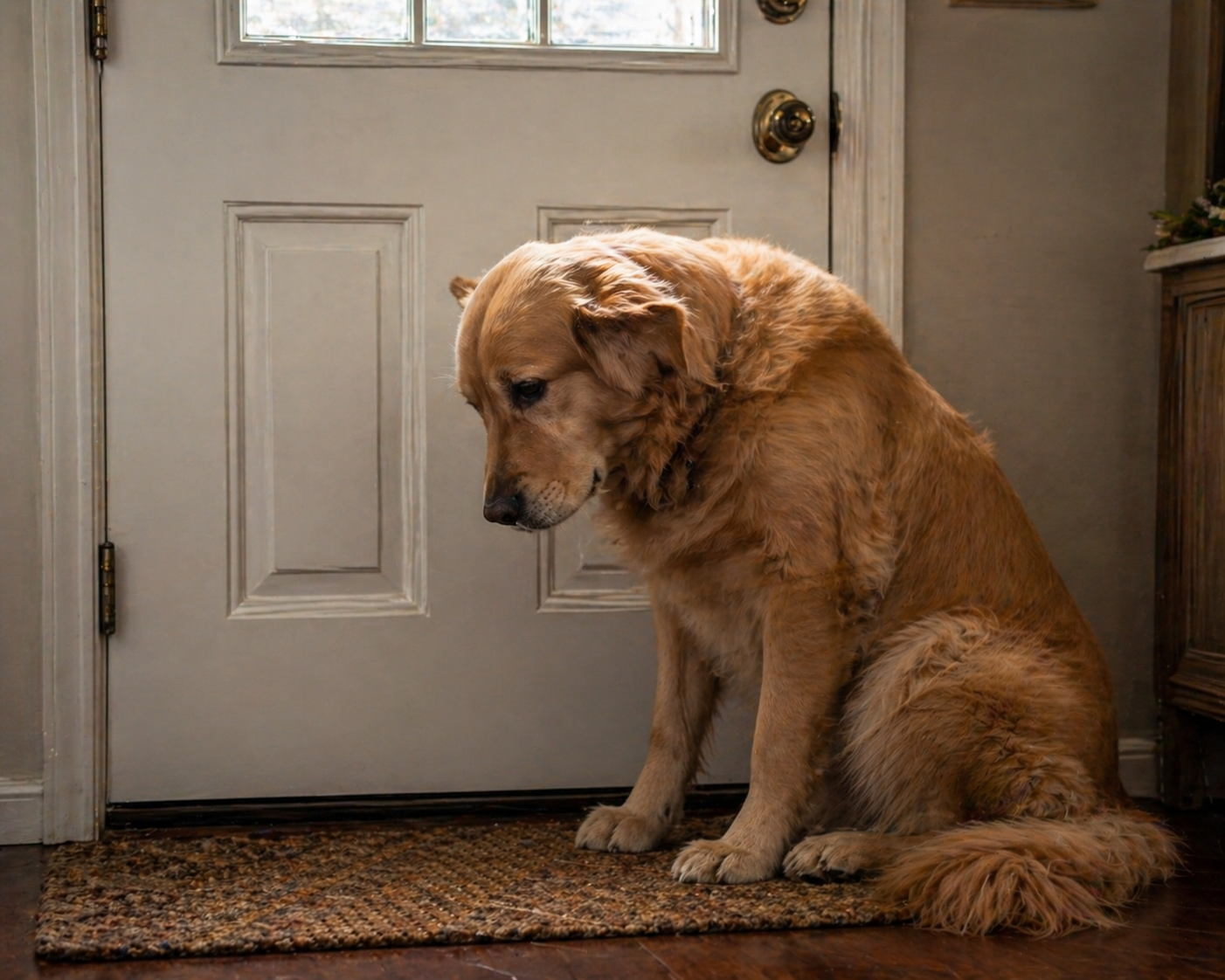
Here’s something most dog owners get completely wrong: they think their dog is being naughty. The chewed-up shoes, the shredded cushions, the howling that drives the neighbors insane — they blame bad behavior. In reality, however, what you’re often dealing with is something far more serious: separation anxiety in dogs.
I’ve worked with hundreds of dog owners over the years, and I can tell you from experience that separation anxiety is one of the most misunderstood and mishandled conditions in the dog world. It’s not disobedience. and it’s not spite. It’s genuine psychological distress — and it deserves a real solution, not a punishment.
Imagine coming home to find your couch destroyed, your dog drenched in sweat, panting like they’ve run a marathon. That’s not a dog who had fun without you. That’s a dog who experienced a full-blown panic attack in your absence.
In this guide, I’m going to walk you through everything: how to identify the signs, understand the root causes, apply a step-by-step training framework, explore treatment options, and build a long-term plan that actually works. Whether you’re a first-time owner or someone battling severe, long-standing anxiety, this is the most complete resource you’ll find on separation anxiety in dogs.
Who This Guide Is For
New Dog Owners Noticing Early Signs
If you’ve recently brought home a puppy or a rescue dog and you’re starting to notice clingy behavior, whining when you leave the room, or minor destructive incidents — this section is your starting point. Catching separation anxiety early makes it significantly easier to treat. Therefore, the sooner you recognize what’s happening, the faster you can intervene.
Most new owners I talk to ask me, “Is this normal puppy behavior or something worse?” A great place to start is my guide on puppy care for beginners — it covers the foundational habits that prevent anxiety from forming in the first place.
Owners Dealing with Sudden Behavioral Changes
Has your dog been perfectly fine for years, and suddenly started showing signs of panic when you leave? Sudden separation anxiety in dogs is extremely common and often tied to life changes — a new work schedule, a move, the loss of another pet, or even a medical issue. In my experience, this is actually the most confusing scenario for owners because there’s no obvious “trigger moment” they can point to.
However, the cause is usually traceable once you know what to look for. I’ll break this down in detail in the Root Causes section below.
People Struggling with Severe or Long-Term Anxiety Cases
If your dog’s anxiety is extreme — self-injury, inability to be alone for even five minutes, constant vocalization — you’re dealing with a serious case that requires a structured, multi-layered approach. Quick fixes won’t cut it here. However, don’t lose hope. I’ve seen dogs with years of severe anxiety make remarkable recoveries with the right rehabilitation plan. This guide will give you that plan.
Quick Answer: What Actually Works for Separation Anxiety in Dogs
The Fastest Way to Calm Your Dog (Short-Term Relief)
I know you might be reading this at 7 AM before rushing to work, so let me give you the quick wins first. For immediate relief, these strategies help reduce your dog’s panic response right now:
- Calming music or white noise — Leave the TV or a dog-specific playlist playing. Studies show classical music significantly reduces cortisol levels in dogs.
- An item with your scent — Leave a worn T-shirt or blanket near your dog’s resting spot. Your scent is genuinely reassuring to them.
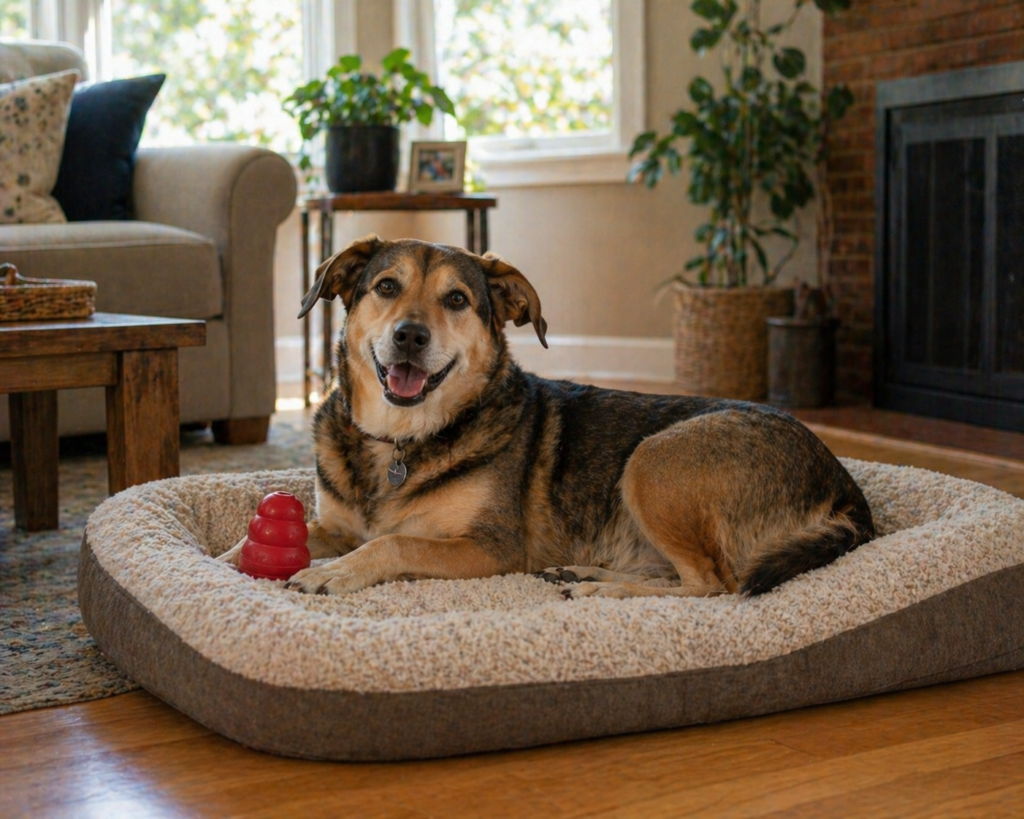
- A Kong toy stuffed with frozen treats — This gives them a mentally engaging, self-soothing activity that lasts 15–30 minutes.
- A consistent departure routine — Same goodbye ritual every time signals safety rather than unpredictability.
- Exercise before leaving — A 20–30 minute walk before departure significantly reduces anxiety-driven energy.
Why Quick Fixes Alone Don’t Solve the Problem
Here’s the hard truth I share with every owner: calming tools and tricks are band-aids, not cures. They reduce the intensity of anxiety in the moment, but they don’t address the underlying emotional dependency your dog has developed. Therefore, if you stop there, the anxiety returns — sometimes worse — the moment you remove those tools.
Separation anxiety in dogs is a learned fear response. The only way to truly fix it is to retrain your dog’s emotional reaction to being alone. That requires time, consistency, and the right methodology. However, quick relief strategies are still worth using because they reduce your dog’s suffering while you work on the long-term solution.
What a Complete Solution Looks Like (Training + Environment + Routine)
In my experience, the dogs who recover fastest are the ones whose owners address all three pillars simultaneously:
- Training: Desensitization and graduated departure training
- Environment: Safe space design, enrichment tools, and calming aids
- Routine: Predictable daily schedules that reduce uncertainty
We’ll cover each of these in depth throughout this guide. For now, know that this is not a one-week fix. Most dogs show meaningful improvement within 4–8 weeks of consistent work, and full recovery can take 3–6 months for moderate to severe cases.
Signs Your Dog Is Struggling (How to Identify It Early)
Behavioral Signs Most Owners Ignore
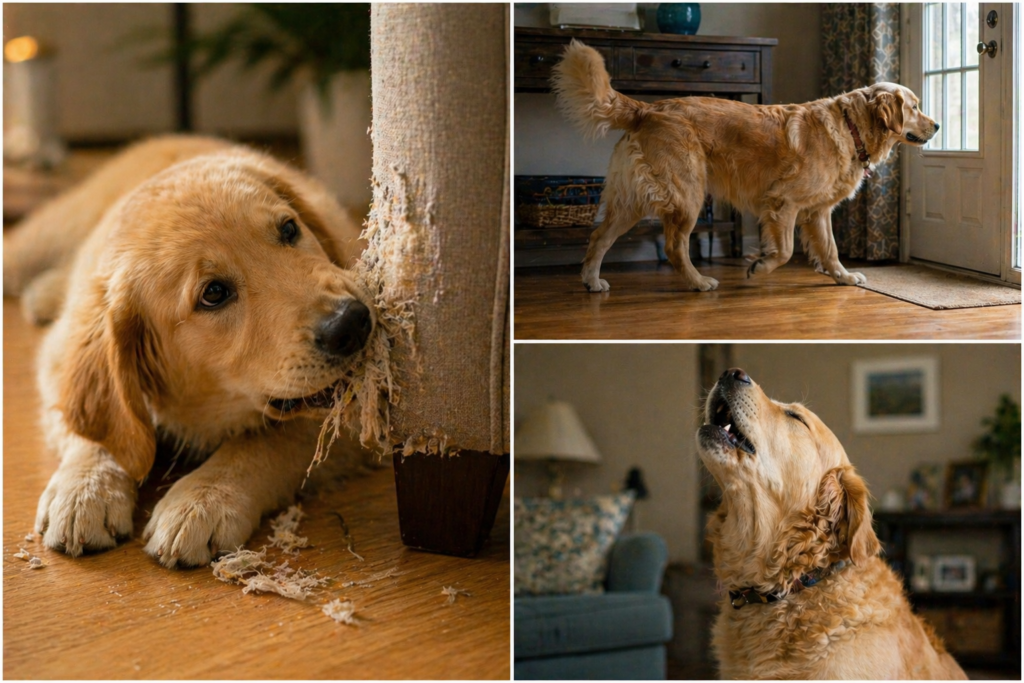
The obvious signs — destroyed furniture, neighbors complaining about barking — are hard to miss. However, there are subtler early warning signs that most owners overlook entirely:
- Velcro behavior: Following you from room to room constantly, unable to settle unless physically touching you
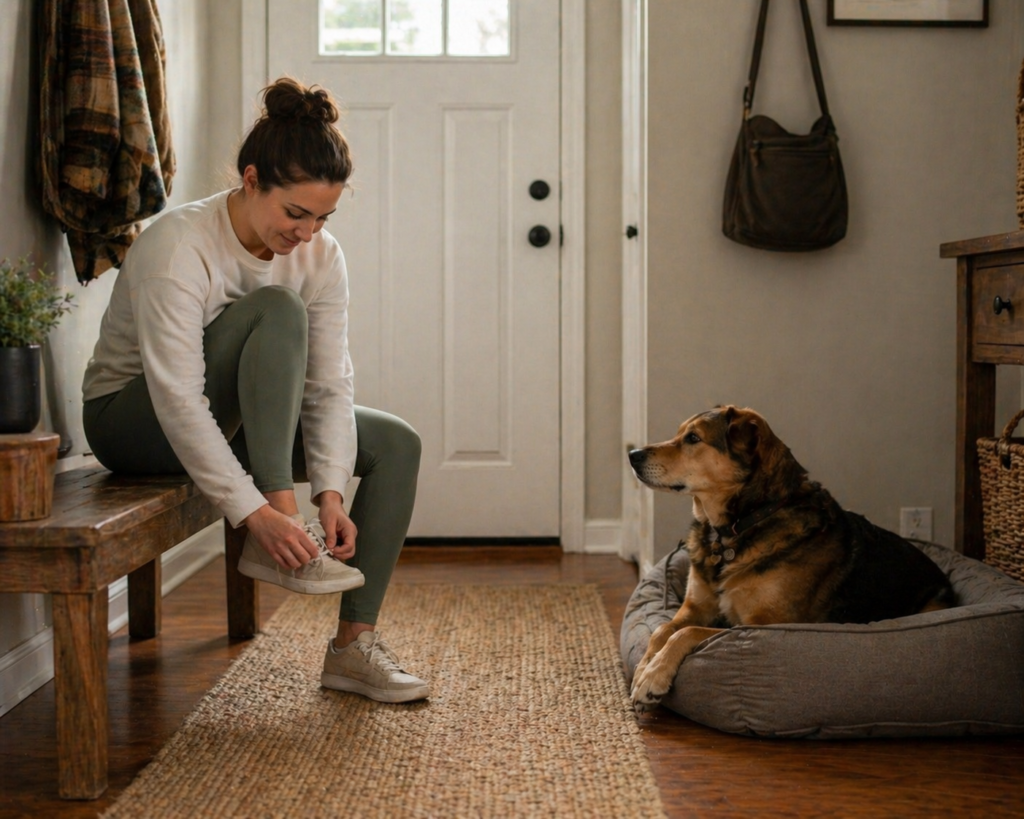
- Pre-departure anxiety: Trembling, yawning excessively, or becoming hyperactive when you pick up your keys or put on shoes
- Over-the-top greetings: Explosive excitement when you return, lasting more than 2–3 minutes
- Refusal to eat: Not touching food or treats left out while you’re gone
- Pacing or circling: Repetitive movement, especially near doors or windows
- Excessive drooling or panting: Signs of physiological stress response
- Attempts to escape: Scratching doors, windows, or even destroying crates to follow you
The key behavioral signs that indicate separation anxiety rather than simple boredom are that these behaviors happen specifically in relation to your departure — not randomly throughout the day.
Emotional Patterns Behind the Behavior
Not all anxious dogs are the same, and in my experience, understanding the emotional driver behind the behavior changes how you treat it:
- Panic response: True separation anxiety. The dog genuinely believes they are in danger when alone. Behavior is frantic and escalates quickly.
- Frustration-based anxiety: The dog is not afraid, but is unable to cope with not getting what they want (access to you). Often seen in over-attached dogs.
- Boredom or under-stimulation: Not technically separation anxiety — the dog has learned that destruction leads to attention. The behaviors look similar but respond to different interventions.
Correctly identifying which pattern you’re dealing with is the first step toward applying the right solution.
Mild vs Severe Separation Anxiety (How to Tell the Difference)
| Indicator | Mild Anxiety | Severe Anxiety |
| Duration of distress | Settles within 20-30 min | Lasts entire absence |
| Destruction | Minor, near exits only | Widespread, intensive |
| Self-harm | None | Possible — paws, mouth injuries |
| Eating | Eats treats eventually | Refuses all food when alone |
| Response to training | Improves within weeks | Slow, requires months + vet |
What Actually Causes Separation Anxiety in Dogs
Psychological Triggers (Attachment Patterns)
Dogs are social pack animals. However, the modern domestic dog has been selectively bred over thousands of years to be intensely bonded to humans. This is wonderful in most ways — but it creates a vulnerability. When that bond forms without boundaries, the dog can develop an unhealthy dependence where your presence becomes a biological need rather than a preference.
This is called hyper-attachment, and it’s the root psychological trigger for most cases of separation anxiety. It develops gradually, often without the owner realizing it — through excessive cuddling, never giving the dog time alone, or inadvertently rewarding anxious behavior with attention.
Sudden Separation Anxiety — Why It Appears Overnight
Sudden separation anxiety in dogs is one of the most common questions I get. An owner tells me their dog was perfectly fine for three years, and then seemingly overnight, everything changed. In my experience, “sudden” anxiety almost always has one of these triggers:
- Schedule change: Working from home and then returning to the office is the single most common trigger I see. The dog adapted to constant company — then lost it.
- Loss or change in the household: Death of another pet, a family member moving out, or a new baby changes the social dynamics the dog was anchored to.
- A traumatic event: Fireworks, a break-in, an accident — anything that frightened the dog while alone can create a conditioned fear response to being alone.
- Medical issues: Pain, cognitive decline in older dogs, or hormonal imbalances can trigger what looks like behavioral anxiety. Always rule this out with a vet first.
Environmental Changes (New Home, Schedule Shifts, Loss)
Moving to a new home is a significant stressor for dogs. Therefore, if your dog was previously calm and started showing signs after a move, the unfamiliar environment combined with disrupted routine is almost certainly the cause. Routines are deeply anchoring for dogs. When those routines break down — new work hours, a new home, changes in who’s at home — anxiety often follows.
For example, the COVID-19 period created an explosion of separation anxiety cases precisely because dogs adapted to constant human presence during lockdowns, then couldn’t cope when that changed.
Dependency on One Person (Single-Owner Attachment Issues)
This is a specific and often frustrating pattern: dog separation anxiety when one person leaves — even if other people are still present. I’ve seen this in households where one person is the primary caregiver, the one who feeds, walks, and trains the dog. The dog forms a singular bond so strong that the absence of that one person triggers anxiety regardless of who else is home.
This pattern requires specific intervention — not just general anxiety training, but deliberate relationship-balancing with other household members.
Immediate Relief: How to Calm a Dog Right Now
What to Do Before Leaving the House
Your behavior in the 20 minutes before leaving sets the emotional tone for everything that follows. Here’s what I recommend to every owner I work with:
- Exercise first. A tired dog is a calmer dog. A 20–30 minute walk or vigorous play session before departure burns anxious energy.
- No dramatic goodbyes. I know it feels unkind, but long, emotional farewells amplify your dog’s anxiety. Keep your departure calm and matter-of-fact.
- Settle your dog before you leave. Give them a command like ‘go to your place’ and ensure they’re calm before you walk out.
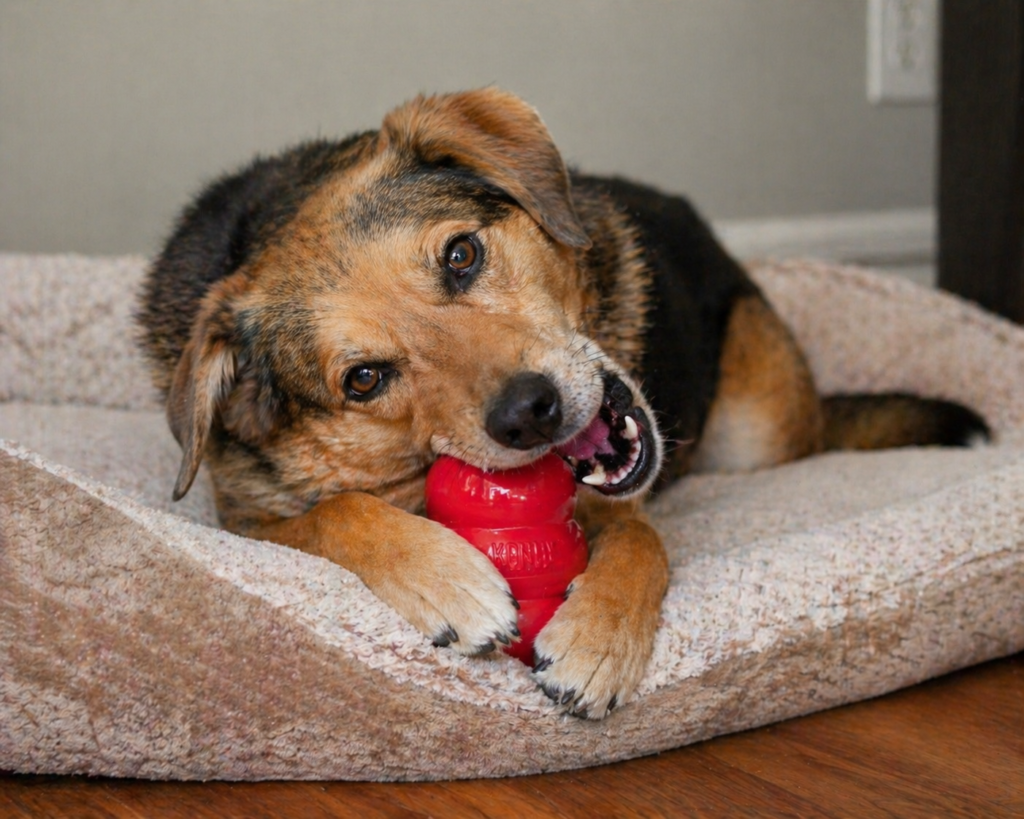
- Provide a high-value activity. A frozen Kong, a lick mat, or a puzzle feeder gives them something positive to focus on the moment you leave.
How to Reduce Panic During Your Absence
Several tools can reduce the intensity of separation anxiety while your dog is alone. Therefore, these are worth setting up even before you’ve started formal training:
- Pet camera: Allows you to monitor your dog’s behavior and, with two-way audio, offer occasional reassurance.
- Dog appeasing pheromone (DAP) diffuser: These release synthetic versions of the calming pheromone mother dogs produce. Products like Adaptil have solid research backing them.
- Background noise: A TV set to a channel with human voices (not action shows with loud sounds) or specially designed dog music reduces the silence that amplifies anxiety.
- A dog walker or midday check-in: Breaking up long absences is one of the most practical short-term interventions available.
Tools That Help Instantly (Toys, Scent Items, Routine Cues)
The best separation anxiety toys for dogs are ones that require sustained mental engagement — not just something to carry around. My top recommendations:
- Frozen Kongs: Fill with peanut butter, banana, or kibble mixed with broth, then freeze overnight. Provides 20–30 minutes of focused, self-soothing activity.
- Snuffle mats: Engages the dog’s natural foraging instinct, which is inherently calming.
- Treat puzzles and interactive feeders: Provides mental stimulation that reduces stress hormones.
- Your scent: A worn article of clothing left with your dog is a simple but genuinely effective calming tool.
Step-by-Step Framework to Fix Separation Anxiety (What Actually Works in 2026)
Step 1: Reduce Emotional Dependency
Before you do any departure training, you need to address the root problem — your dog’s excessive emotional reliance on you. This means deliberately practicing separation inside the home:
- Practice independence exercises: Ask your dog to settle on their bed in a different room while you’re home. Start with 1 minute and build up.
- Stop rewarding clinginess: If your dog follows you everywhere, gently redirect them to their space rather than giving attention.
- Use a baby gate or tether: Create physical boundaries inside the home so your dog gets used to being separated from you while still being safe.
- Vary your attention patterns: Rather than constant contact, give affection at structured times rather than on demand.
This step alone — done consistently over 2 weeks — can produce noticeable improvements in moderate anxiety cases.
Step 2: Desensitization Training (Proven Method)
Desensitization training for separation anxiety in dogs is the gold standard approach, and for good reason — it works by gradually changing your dog’s emotional response to departure cues. Here’s how to start:
- Identify departure triggers: Keys, shoes, bag, coat — note every cue that causes your dog to show pre-anxiety behavior.
- Devalue the triggers: Pick up your keys, then sit back down. Put on your shoes, then watch TV. Repeat this dozens of times until the triggers no longer cause a response.
- Practice micro-departures: Step outside for 10 seconds, come back in calmly. Extend to 30 seconds, then 2 minutes, then 5. This is the core of desensitization training.
- Never return when your dog is distressed: If you return at the point of panic, you reinforce that panicking brings you back. Return only during calm moments.
Step 3: Gradual Departure Training Plan
This is the structured phase where you systematically build your dog’s ability to be alone. Here’s the weekly progression I use with my clients:
| Week | Max Alone Time | Sessions Per Day | Focus |
| 1 | 5 minutes | 5–8 | Micro-departures, trigger desensitization |
| 2 | 15 minutes | 4–6 | Short, calm departures |
| 3 | 30 minutes | 3–4 | Building duration, calm returns |
| 4 | 1 hour | 2–3 | Real-world departures |
| 5–8 | 2–4 hours | 1–2 | Generalization + maintenance |
Note: If your dog regresses at any stage, drop back one week and progress more slowly. Regression is normal — it doesn’t mean you’ve failed.
Step 4: Building Independence Through Daily Routines
Predictable daily routines are one of the most underrated tools in anxiety management. Dogs thrive on knowing what to expect. A consistent puppy training schedule — or adult dog routine — tells your dog exactly when they’ll eat, walk, interact, and rest. This predictability reduces baseline anxiety significantly. Check out my detailed guide on how to train a dog at home for building the right daily framework.
- Feed at the same times each day
- Walk at consistent times
- Practice alone time at the same time each day
- Keep bedtime routines stable
Step 5: Tracking Progress and Adjusting Strategy
One of the biggest mistakes owners make is training blindly without tracking results. Therefore, I recommend keeping a simple anxiety log:
- Date and duration of each practice session
- Your dog’s behavior during and after (scale of 1–10 distress)
- Any regressions or notable improvements
- Environmental factors (weather, unusual sounds, etc.)
This data helps you identify patterns, adjust your timeline, and recognize genuine progress even when it feels slow.
Training Methods That Deliver Real Results
Desensitization Training Explained Simply
Desensitization training for separation anxiety works on a simple principle: repeated, controlled exposure to the feared trigger — in this case, your departure — at a level low enough that it doesn’t cause anxiety, gradually increases the dog’s tolerance. Think of it like treating a human phobia through exposure therapy.
The critical rule is: never move to the next level of difficulty until your dog is completely calm at the current level. Rushing is the number one mistake I see owners make. However, patience here pays enormous dividends. Dogs trained properly through desensitization almost never relapse to their previous severity.
Crate Training — When It Helps vs When It Makes Things Worse
Crate training for separation anxiety in older dogs is a genuinely complicated topic. For some dogs, a crate provides a den-like safe space that reduces anxiety. For others — particularly dogs who already experience confinement anxiety — a crate intensifies panic. Here’s my framework for deciding:
- Use a crate if: Your dog already uses a crate voluntarily, chooses to rest there, and the crate is large enough to be comfortable.
- Avoid a crate if: Your dog has ever escaped from or injured themselves in a crate, shows increased distress when crated, or has never been crate trained.
- For older dogs: Introduce the crate very gradually — never force confinement. Use high-value treats to create positive associations before ever closing the door.
If you’re introducing crate training to a new puppy, my new puppy checklist covers the foundational crate introduction process.
Structured Training Plan (Beginner to Advanced)
Here’s how the training approach changes by severity level:
- Beginner (mild anxiety): Focus on independence exercises indoors + departure trigger desensitization. 2–4 weeks. High success rate.
- Intermediate (moderate anxiety): Add graduated departures + enrichment tools + routine restructuring. 4–8 weeks. Success rate is high with consistency.
- Advanced (severe anxiety): All of the above + veterinary assessment + possible medication + professional behaviorist involvement. 3–6+ months. Requires patience.
Can Training Alone Fix Severe Separation Anxiety?
This is one of the most important questions I get asked. The honest answer is: sometimes, but not always. For mild to moderate separation anxiety in dogs, training alone — done correctly and consistently — is usually sufficient. However, for truly severe cases, training without addressing the underlying neurological anxiety is like trying to teach someone with crippling PTSD to relax through willpower alone.
In severe cases, a combination of behavioral modification and medication produces dramatically better outcomes than training alone. I’ll cover this in the treatment section below.
Treatment Options (When Training Isn’t Enough)
Behavioral Therapy Approaches
Beyond the training framework outlined above, certified animal behaviorists and veterinary behaviorists use several evidence-based approaches for more complex cases:
- Counter-conditioning: Pairing your departure with something the dog loves (high-value treats, a special toy) to change the emotional association from negative to positive.
- Systematic desensitization: The structured approach described earlier, often performed more rigorously with professional guidance.
- Confidence-building exercises: Training new commands, agility work, or nose work games that build overall emotional resilience.
When to Consider Medication (Vet-Backed Guidance)
I always tell owners: medication isn’t a sign of failure — it’s a tool. In my experience, dog separation anxiety medication is worth discussing with your vet if:
- Your dog injures themselves during anxiety episodes
- Training has shown no improvement after 6–8 consistent weeks
- Your dog cannot function for even 5 minutes alone
- The anxiety is clearly physiological in nature (excessive drooling, vomiting, complete inability to settle)
The goal of medication in separation anxiety is NOT to sedate your dog. The goal is to reduce the neurological anxiety response enough that the dog CAN learn from training. In other words, medication and training work together — medication alone is never the answer.
Types of Medications Used and What to Expect
Your vet will guide you on specific prescriptions. However, the most commonly used medications for dog separation anxiety include:
| Medication Type | Examples | Notes |
| SSRIs (long-term) | Fluoxetine (Reconcile) | Daily medication; takes 4–6 weeks for full effect |
| TCAs | Clomipramine (Clomicalm) | FDA-approved specifically for dog anxiety |
| Situational anxiolytics | Trazodone, alprazolam | For acute episodes; not for daily use |
Always use medication under direct veterinary supervision. Never give human anti-anxiety medication to your dog — many are toxic to them.
Combining Training with Treatment for Best Results
The most effective approach I’ve seen — and the one backed by current veterinary research — is combining behavioral training with short-term medication when needed. The medication reduces the dog’s anxiety enough to make them receptive to training. As the dog develops new coping skills and independence, medication is gradually tapered under vet guidance. In most cases, the dog eventually maintains their calm without medication.
Natural Remedies and Home Solutions That Actually Help
Environmental Enrichment Strategies
I’ve found that a well-enriched environment can reduce mild to moderate separation anxiety symptoms by 40–60% on its own. The key is providing your dog with enough mental and physical stimulation that their emotional resources aren’t entirely focused on your absence:
- Rotate toys weekly: Novelty keeps engagement high. Introduce a “new” toy each day by rotating from a stored collection.
- Use food puzzles: Feed entire meals from puzzle feeders or Kongs to make mealtimes a mentally engaging activity.
- Window access: A comfortable perch near a window gives your dog visual stimulation and something to engage with during the day.
- Dog-safe TV: DogTV is specifically designed with dog-appropriate content and sensory experiences.
Calming Tools (Toys, Scent, Sound)
In addition to the enrichment strategies above, several calming tools have solid anecdotal and research backing:
- Adaptil diffuser or collar: Dog appeasing pheromones that mimic the calming signals of a nursing mother. Available without prescription.
- Calming chews: Products containing L-theanine, melatonin, or chamomile can take the edge off mild anxiety. Look for vet-recommended brands.
- Thundershirt or anxiety wrap: Gentle, sustained pressure has a calming effect similar to swaddling in human infants. Works well for approximately 50–60% of dogs.
- Calming music: Through a Dog’s Ear is a research-backed music series specifically composed to reduce canine stress.
Routine-Based Anxiety Reduction
I can’t overstate how powerful a consistent daily routine is for an anxious dog. Predictability is the antidote to anxiety. When your dog knows exactly what happens next, the uncertainty that feeds panic is dramatically reduced. A solid daily framework — consistent wake time, feeding schedule, walk times, and solo time — creates a psychological safety net for your dog.
If you’re working on a puppy’s routine from scratch, my best puppy feeding schedule and puppy training schedule guides give you a complete daily structure to build from.
What ‘Home Remedies’ Work vs Myths
Let me be direct: many things sold as home remedies for separation anxiety in dogs have little to no evidence behind them. Here’s a clear breakdown:
| Remedy | Works? | Notes |
| Frozen Kong toy | ✓ Yes | Strong evidence |
| Your worn clothing (scent) | ✓ Yes | Proven calming effect |
| Adaptil/DAP pheromones | ✓ Often | Research-backed |
| Calming music | ✓ Often | Studies support use |
| CBD oil | ⚠ Mixed | Limited canine studies |
| Getting another dog | ✗ Rarely | Doesn’t address root cause |
| Punishment-based methods | ✗ Never | Makes anxiety significantly worse |
Common Mistakes That Make Separation Anxiety Worse
Punishing Anxious Behavior
This is the mistake I see most often, and it breaks my heart every time. A dog who has destroyed the couch is not being defiant — they were in a state of panic. Punishing that behavior doesn’t teach them to feel calmer; it teaches them that your return is also something to fear. The result is often increased anxiety, not less. Punishment has no place in separation anxiety treatment. Full stop.
Over-Attaching to Your Dog
If you respond to every whine, carry your dog everywhere, never let them settle alone, and make constant physical contact a fixture of every moment together — you’re creating emotional dependency. I know it comes from a place of love, and therefore I always address this gently. However, loving your dog means giving them the skills to feel okay on their own. Over-attachment, however well-intentioned, is one of the leading causes of separation anxiety.
Leaving Suddenly Without Preparation
Dogs are extraordinarily sensitive to patterns. If you always rush out, stressed and hurried, your dog absorbs that emotional state. Therefore, your pre-departure behavior matters as much as any training session. Rushed, anxious goodbyes create rushed, anxious dogs. Calm, predictable departures create calm dogs.
Relying Only on Quick Fixes
I’ve already touched on this, but it bears repeating: Kongs, pheromone diffusers, and calming music are adjuncts, not solutions. Many owners try these tools for a week, see modest improvement, and then feel confused when the anxiety returns. Quick fixes work best as part of a comprehensive training and routine plan — not instead of one.
Beginner vs Advanced Cases (What Changes in Approach)
Mild Anxiety — What Works Quickly
For mild separation anxiety in dogs, the good news is that relatively simple interventions produce fast results. In my experience, dogs with mild anxiety typically respond within 2–4 weeks to a combination of:
- Daily independence exercises (settling in a separate room)
- Departure trigger desensitization (keys, shoes, etc.)
- Enrichment tools (frozen Kongs, puzzle feeders)
- Consistent daily routine
The key is catching it early and being consistent. Mild anxiety that goes untreated often becomes moderate anxiety within months.
Moderate Anxiety — Structured Intervention
Moderate cases require a more deliberate, structured approach. This means following the full graduated departure training plan outlined in Step 3, combined with daily enrichment and a veterinary checkup to rule out physical contributors. Progress is slower — typically 4–8 weeks — but with consistency, moderate anxiety cases have excellent outcomes.
Severe Anxiety — Long-Term Rehabilitation Strategy
Severe separation anxiety in dogs training is a long game. However, I’ve seen truly severe cases — dogs who couldn’t be left alone for 60 seconds without injuring themselves — make extraordinary progress with the right plan. The key elements of severe anxiety rehabilitation:
- Full veterinary assessment first
- Medication to reduce baseline neurological anxiety
- Working with a certified applied animal behaviorist (CAAB)
- Extremely slow, systematic desensitization — starting from literally 1–2 seconds
- Environmental management to prevent injury and re-traumatization
- Owner support — burnout is real; a support system matters
Special Scenarios Most Guides Ignore
Separation Anxiety at Night
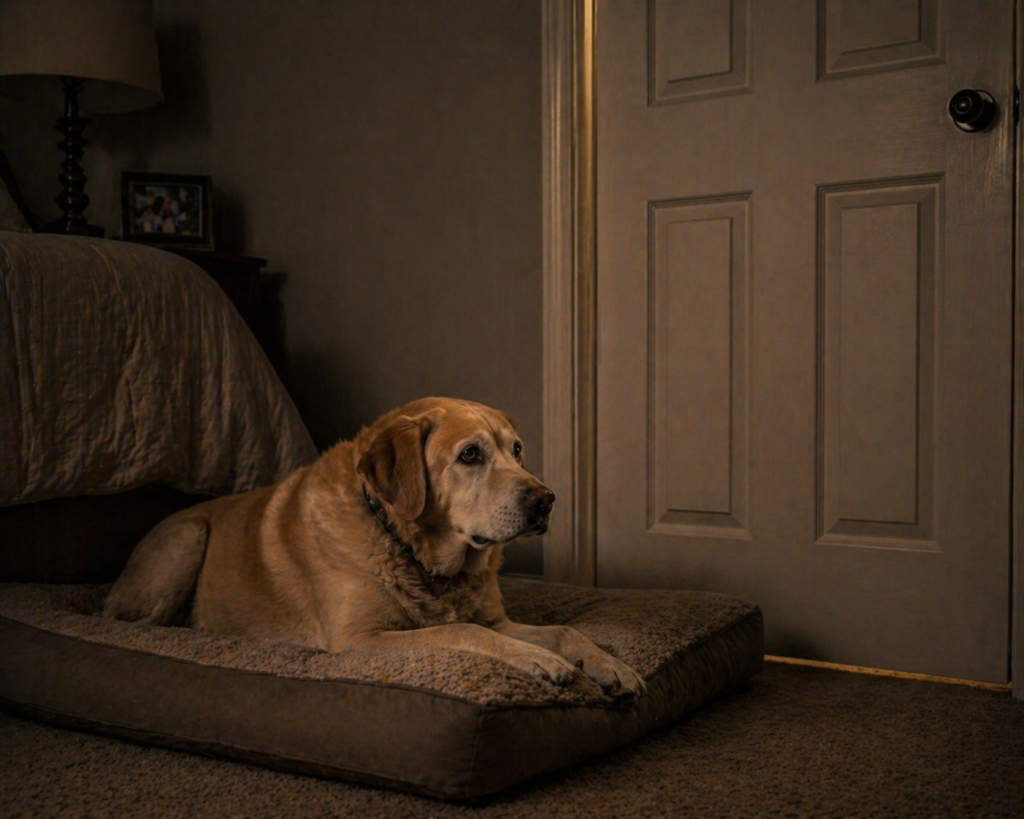
Separation anxiety in dogs at night presents somewhat differently from daytime anxiety. The combination of darkness, silence, and physical separation from the owner can trigger panic in dogs that are otherwise calm during the day. Solutions I’ve seen work:
- Sleeping location: For dogs with nighttime anxiety, having them sleep in your bedroom (even on a floor bed) can resolve the issue entirely without creating other problems.
- White noise machine: Reduces environmental sounds that might be triggering nighttime alertness.
- Gradual distance training: If you want your dog to eventually sleep separately, move their sleeping spot progressively further from your room over several weeks.
Anxiety When One Specific Person Leaves
Dog separation anxiety when one person leaves is a hyper-attachment pattern. The fix requires dual-pronged intervention: reducing the primary person’s interaction to normal levels while simultaneously increasing the other household members’ caregiving role. The bond doesn’t need to be broken — it needs to be balanced. Within 4–6 weeks of deliberate relationship redistribution, most dogs adjust significantly.
Older Dogs with New Anxiety Issues
If your senior dog has suddenly developed anxiety they never had before, I always recommend a full veterinary workup as a first step. Cognitive Dysfunction Syndrome (CDS) — canine cognitive decline — presents with anxiety, confusion, and behavioral changes that mirror separation anxiety but have different underlying causes and different treatment approaches. Additionally, pain is a frequently overlooked driver of anxiety in older dogs.
Rescue Dogs and Trauma-Based Anxiety
Rescue dogs often carry anxiety from histories of abandonment, inconsistent care, or abuse. Their anxiety isn’t just about the present — it’s rooted in past trauma. Therefore, the approach with rescue dogs needs to be gentler, slower, and more focused on building basic trust before any departure training begins. The first 3 months with a rescue dog should be primarily about safety, trust, and consistency — not training milestones.
If you’ve just adopted a dog, my guide on dogs as a pet — everything you need to know is worth reading alongside this one.
How to Prevent Separation Anxiety Before It Starts
The Right Way to Build Independence Early
Prevention is dramatically easier than treatment. The foundations of independence need to be built from the very beginning — ideally from puppyhood. This means:
- Practicing alone time from day one — even short periods of crate or room separation
- Not reinforcing clingy behavior with attention
- Building confidence through consistent, positive training
- Exposing puppies to a variety of people, places, and experiences early
My puppy essentials checklist includes the foundational setup you need to prevent anxiety from developing in the first place.
Daily Habits That Prevent Anxiety
These daily habits, practiced consistently, dramatically reduce the likelihood of separation anxiety developing:
- Regular, predictable exercise
- Structured alone time every single day — even if just 30 minutes
- Feeding at consistent times
- Avoiding on-demand affection — make cuddle time structured, not constant
- Practicing short departures regularly, even when you don’t need to leave
Socialization and Routine Planning
Well-socialized dogs are more emotionally resilient. A dog who has been exposed to a variety of environments, people, dogs, and experiences during their critical socialization window (3–12 weeks for puppies) develops a fundamentally more robust stress response system. Additionally, a predictable daily routine reduces the ambient uncertainty that feeds anxiety.
The Role of the 3-3-3 Rule in Prevention
The 3-3-3 rule is commonly cited in rescue dog adoption contexts, but it applies beautifully to anxiety prevention in any new dog. The rule acknowledges that dogs need:
- 3 days to feel safe and begin decompressing in their new environment
- 3 weeks to begin learning routines and understanding what’s expected
- 3 months to fully settle, trust, and show their true personality
Understanding this timeline prevents owners from expecting too much too soon — and from inadvertently creating anxiety by rushing training or leaving the dog alone for long periods before they’ve had time to adjust.
Tools and Resources That Make Training Easier
Best Types of Toys for Anxious Dogs
Not all dog toys are created equal when it comes to separation anxiety. The best separation anxiety toys for dogs share a common feature: they require sustained engagement and provide some form of reward for that engagement. My top categories:
- Food-dispensing toys: Kongs, West Paw Toppls, Licki Mats — anything that makes the dog work for their food
- Chew items: Bully sticks, raw bones, or appropriate dental chews provide a calming, self-soothing oral activity
- Snuffle mats: Foraging stimulation that naturally lowers cortisol
- Hide-and-seek feeders: Toys that require the dog to find hidden treats through smell
Training Plans and Structured Programs
For owners who want more structured guidance, several excellent resources exist beyond this guide:
- Malena DeMartini’s Separation Anxiety Protocol: The gold standard of professional separation anxiety training. Her book “Treating Separation Anxiety in Dogs” is the definitive resource.
- Mission Possible SA: An online training program by certified SA trainers
- Your local veterinary behaviorist: For severe cases, this is the most direct route to professional-level care
When to Seek Professional Help
Please don’t try to manage everything alone if your dog falls into any of these categories:
- Self-injury during anxiety episodes
- Anxiety so severe the dog cannot eat, drink, or settle for any period
- No improvement after 8 consistent weeks of training
- Suspected medical contribution to anxiety
A certified applied animal behaviorist (CAAB) or veterinary behaviorist is worth every penny in these situations. Professional support dramatically improves outcomes and reduces the emotional toll on both you and your dog.
Practical Checklist (What to Do Starting Today)
Daily Routine Checklist
- Morning exercise (20–30 min minimum)
- Feed at consistent time
- Practice 1 indoor independence session (dog settles in separate room)
- 1–2 short departure practice sessions
- Enrichment activity provided (Kong, puzzle feeder, snuffle mat)
- Evening walk/exercise
- Log progress in anxiety journal
Pre-Departure Checklist
- Exercise completed at least 30 min before leaving
- Enrichment toy prepared and ready
- Background noise activated (TV/music)
- Dog settled in their spot before you leave
- Departure calm and low-key — no emotional goodbye
- Scent item available if needed
Weekly Progress Tracking
- Record maximum alone time achieved without distress
- Note any new or resolved symptoms
- Adjust next week’s training based on progress
- Check in with vet or behaviorist if no improvement
Frequently Asked Questions
How Do You Help a Dog with Separation Anxiety?
The most effective approach combines three elements: behavioral training (desensitization and gradual departure training), environmental enrichment (Kongs, calming tools, background noise), and routine consistency. For severe cases, veterinary support and possible medication are also warranted. There’s no single magic fix — but a well-executed combination of these strategies reliably produces results.
What Is the 3-3-3 Rule for Dog Anxiety?
The 3-3-3 rule refers to the adjustment timeline for dogs entering a new home. It takes approximately 3 days for a dog to begin decompressing, 3 weeks to learn routines and expectations, and 3 months to fully settle and feel secure. This rule is especially relevant for rescue dogs and is valuable for setting realistic expectations during the anxiety recovery process.
What Is the 10-10-10 Rule for Puppies?
The 10-10-10 rule is a socialization guideline suggesting that puppies should experience 10 different surfaces, 10 different environments, and 10 different social interactions before 10 weeks of age. This early exposure builds neurological resilience and significantly reduces the likelihood of anxiety disorders developing later in life.
For more puppy socialization guidance, check out my complete puppy care guide for beginners.
What Medication Is Used for Separation Anxiety in Dogs?
The most commonly prescribed medications are fluoxetine (Reconcile) — an SSRI — and clomipramine (Clomicalm) — a tricyclic antidepressant. Both require daily dosing and take several weeks to reach full effectiveness. Situational medications like trazodone may be used for acute episodes. Always consult your veterinarian before starting any medication.
How Do You Fix Severe Separation Anxiety in Dogs?
Severe separation anxiety requires a multi-layered approach: veterinary assessment first, medication to reduce the neurological anxiety response, extremely gradual desensitization training starting from mere seconds of alone time, professional behaviorist support, and consistent environmental management. Recovery is possible but takes months of committed effort. In my experience, owners who stay the course see remarkable results.
What Not to Do with Dog Separation Anxiety?
Never punish your dog for anxiety-driven behavior — it worsens anxiety. Don’t make dramatic emotional farewells. Avoid introducing a new pet as a “solution” (it almost never works). Don’t skip steps in the training process or rush progression. And crucially — don’t ignore it and hope it resolves on its own. Untreated separation anxiety almost always escalates.
Final Action Plan (Step-by-Step Execution)
What to Start Today
- Observe and log your dog’s specific symptoms and triggers
- Begin departure trigger desensitization (keys, shoes — pick them up, put them down)
- Set up an enrichment toy for your next departure
- Establish a consistent morning exercise routine
- Book a vet appointment if you suspect a medical component
What to Implement This Week
- Start daily indoor independence sessions — 5 minutes, build slowly
- Create a calming pre-departure routine and stick to it every time
- Set up background noise for departures
- Begin logging your dog’s anxiety level (1–10) for each session
- Start graduated departure training — first session: step outside for 10 seconds
What to Expect in 30–60 Days
With consistent implementation of this plan, here’s a realistic timeline:
- Days 1–14: You’ll notice reduced pre-departure anxiety as triggers lose their power
- Days 15–30: Your dog should tolerate 20–45 minutes alone without significant distress
- Days 30–60: Most dogs with mild to moderate anxiety can handle 1–3 hours alone comfortably
- Beyond 60 days: Continue building duration gradually. Severe cases may take 3–6 months for full results.
When to Escalate to Professional Help
Don’t wait indefinitely if things aren’t progressing. I recommend escalating to professional help if:
- There’s been no meaningful improvement after 8 weeks of consistent effort
- Your dog has injured themselves during an anxiety episode
- The anxiety is affecting your quality of life to the point where you can’t leave home
- You suspect a medical component that hasn’t been assessed
A certified applied animal behaviorist (CAAB) or veterinary behaviorist can transform the trajectory of even the most difficult cases. Finding professional support is not failure — it’s wisdom.
Conclusion
Separation anxiety in dogs is one of the most emotionally draining challenges a dog owner can face. However, I want you to walk away from this guide with one clear conviction: it is treatable. With the right combination of training, environment, routine, and — when necessary — veterinary support, the vast majority of dogs can learn to feel safe and calm when alone.
The most important thing you can do is start. Today. Even one small step — picking up your keys and putting them down again, giving your dog a frozen Kong before you leave, or logging the first entry in your anxiety journal — matters. Separation anxiety doesn’t resolve overnight, but it does respond to consistent, informed effort.
You’re not just training your dog to be alone. You’re giving them the gift of emotional independence — a dog who feels secure in themselves, not just when you’re in the room. That’s worth every bit of work it takes. If you found this guide helpful, you might also enjoy my related article on how to train a dog at home for building the broader training foundation your dog needs.