
Introduction
When I brought home my first puppy, one of the biggest questions I had was how to set up the best puppy feeding schedule. I honestly had no idea how many times a day to feed him, how much food to put in his bowl, or even what time of day worked best. If you are in the same boat right now, don’t worry — I have been there, and I am going to walk you through everything you need to know.
Following a proper puppy feeding routine matters more than most new owners realize. In fact, feeding your puppy the right amounts at the right times directly affects their growth, digestion, energy levels, and even behavior. Moreover, many common mistakes — like free-feeding or guessing portions — can lead to obesity, digestive issues, or nutritional gaps that are hard to fix later on.
In this guide, I cover puppy feeding schedules by age, a detailed puppy feeding chart by weight, how to use a puppy feeding calculator, and the best meal timing tips for different daily routines. Furthermore, I’ll walk you through foods to avoid, common mistakes to skip, and exactly when to call your vet. Whether you have a tiny Chihuahua or a growing Great Dane, this vet-approved guide has you covered. Let’s get into it.
Why the Best Puppy Feeding Schedule Is Important
Before we get into the specific schedules, it is worth understanding why structure matters so much in those early months. A puppy’s body is not like an adult dog’s body. Therefore, what and when you feed them has a real impact on how they develop over time.
How Feeding Schedules Affect Puppy Growth and Development
Puppies grow at an incredibly fast rate, especially in their first six months of life. Because of this rapid growth, they need a consistent supply of nutrients to support bone development, muscle growth, and brain function. A regular feeding schedule helps regulate their metabolism and ensures they absorb nutrients efficiently throughout the day.
Furthermore, scheduled meals make it much easier to track how much your puppy is actually eating. If you notice a sudden drop in appetite, that early warning sign can help you catch health issues before they become serious problems.
Why Puppies Need More Frequent Meals Than Adult Dogs
Unlike adult dogs, puppies have very small stomachs but extremely high energy needs. As a result, they need to eat more frequently throughout the day to keep their blood sugar stable and avoid hypoglycemia, which is especially common in small breeds. Spreading meals across the day also reduces the risk of bloating and post-meal discomfort.
Additionally, regular meal times create a sense of routine that puppies genuinely thrive on. When your puppy knows when to expect food, they feel more secure and settled — and a secure puppy is generally a calmer, more trainable dog overall.
Signs Your Puppy May Be Eating Too Much or Too Little
It is important to watch for physical cues that tell you whether your puppy’s current feeding plan is working. Here are some clear signs to look out for:
- Eating too much: bloated belly after meals, rapid weight gain, soft stools, unusual lethargy
- Eating too little: visible ribs or spine, low energy levels, dull coat, slow growth for their breed
- Just right: smooth waist visible from above, firm stools, playful and energetic personality
If you are ever unsure, your vet can assess your puppy’s body condition score and give you personalized guidance. For more foundational tips on setting up your puppy’s life well, I’d strongly recommend reading Puppy Care for Beginners: The Complete Step-by-Step Guide — it covers everything from nutrition to socialization in one place.
Best Puppy Feeding Schedule by Age
Every puppy goes through distinct developmental stages, and their feeding needs change significantly as they grow. Below, I have broken down exactly how many meals per day your puppy needs at each age, along with sample feeding times that are realistic and easy to follow.
Puppy Feeding Schedule for 6–8 Weeks Old
At this very young age, puppies are just transitioning from their mother’s milk to solid food. Therefore, meals need to be small, soft, and very frequent. I always recommend soaking dry kibble in warm water to create a soft mush that is easy on their tiny teeth and developing digestive systems.
- Meals per day: 4–5 times
- Recommended feeding times: 7 AM, 11 AM, 3 PM, 7 PM (and optionally 10 PM)
- Portion size: Very small — roughly 1/4 cup per meal for most small to medium breeds
- Food type: Wet puppy food or softened dry kibble moistened with warm water
Furthermore, always make sure fresh, clean water is available at all times. At this age, puppies dehydrate more quickly than older dogs, so hydration is just as critical as solid nutrition.
Puppy Feeding Schedule for 8–12 Weeks Old
By 8 weeks, most puppies have moved to their new homes and are eating solid food comfortably. This is also the stage where you will set up your very first real home feeding routine. The goal here is consistency — same times, same quiet location, same bowl every single day.
- Meals per day: 4 times
- Morning feeding: 7:00 AM
- Midday feeding: 12:00 PM
- Afternoon feeding: 5:00 PM
- Evening feeding: 9:00 PM
This schedule also works beautifully for potty training. Since puppies usually need to go outside 15–30 minutes after eating, a structured meal schedule makes it much easier to predict bathroom breaks. In fact, if you are working on housebreaking at the same time, this resource will help a lot: How to Potty Train a Puppy Fast.
Puppy Feeding Schedule for 3–6 Months Old
Between 3 and 6 months, your puppy is growing rapidly and burning through energy like a little furnace. However, their stomach is also getting bigger, so you can start reducing from 4 meals to 3 meals a day around the 3-month mark.
- Meals per day: 3 times
- Morning: 7:00 AM
- Afternoon: 1:00 PM
- Evening: 6:00 PM
During this stage, you may notice growth spurts where your puppy seems extra hungry. This is completely normal and expected. Additionally, some puppies go through brief picky phases — if that happens, try warming up their food slightly to boost the aroma and make it more appealing.
Puppy Feeding Schedule for 6–12 Months Old
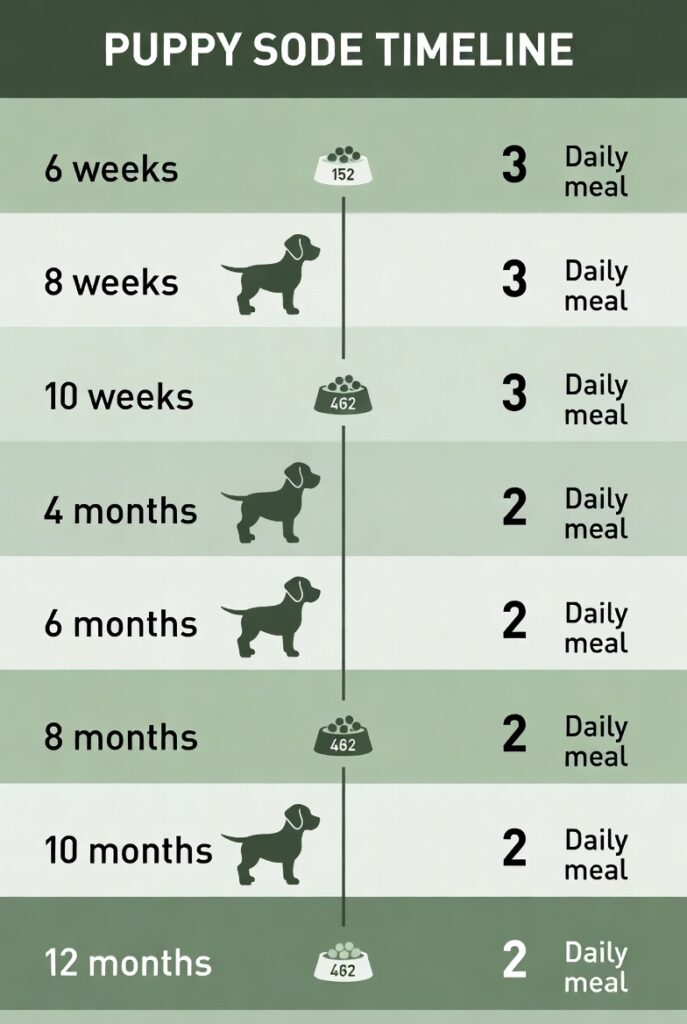
As your puppy approaches adulthood, their growth rate slows down and you can start transitioning from 3 meals to 2 meals per day. The exact timing of this shift depends on your puppy’s breed size.
- Small breeds (under 20 lbs): Can transition at around 6 months
- Medium breeds: Around 6–9 months
- Large and giant breeds: Around 9–12 months, since they grow for longer
- Meals per day: 2 times — morning and evening
For example, a 7-month-old Labrador still benefits from 3 meals per day, while a 7-month-old Maltese is usually ready for 2. Always watch your puppy’s energy levels and body weight when making this transition to ensure they are getting enough fuel throughout the day.
Puppy Feeding Chart by Weight and Age
One of the most useful tools any puppy owner can have is a clear, easy-to-read puppy feeding chart. Keep in mind that these are general guidelines — always cross-reference with the specific packaging of your dog food brand, since calorie density varies widely between products.
How Much to Feed a Puppy by Weight
The table below shows a general puppy feeding chart organized by age, expected adult weight, daily meal frequency, and approximate daily food intake. These amounts represent total daily intake split evenly across all meals during the day.
| Age | Adult Weight | Meals/Day | Daily Amount (cups) | Daily Amount (grams) |
| 6–8 weeks | Under 10 lbs | 4–5 | 1/4–1/2 | 30–60g |
| 6–8 weeks | 10–25 lbs | 4–5 | 1/2–3/4 | 60–90g |
| 6–8 weeks | 25–50 lbs | 4–5 | 3/4–1 | 90–120g |
| 8–12 weeks | Under 10 lbs | 4 | 1/4–1/2 | 30–60g |
| 8–12 weeks | 10–25 lbs | 4 | 1/2–1 | 60–120g |
| 8–12 weeks | 25–50 lbs | 4 | 1–2 | 120–240g |
| 8–12 weeks | 50+ lbs | 4 | 2–3 | 240–360g |
| 3–6 months | Under 10 lbs | 3 | 1/3–2/3 | 40–80g |
| 3–6 months | 10–25 lbs | 3 | 2/3–1.5 | 80–180g |
| 3–6 months | 25–50 lbs | 3 | 1.5–2.5 | 180–300g |
| 3–6 months | 50+ lbs | 3 | 2.5–4 | 300–480g |
| 6–12 months | Under 10 lbs | 2 | 1/4–1/2 | 30–60g |
| 6–12 months | 10–25 lbs | 2 | 1/2–1.5 | 60–180g |
| 6–12 months | 25–50 lbs | 2 | 1.5–3 | 180–360g |
| 6–12 months | 50+ lbs | 2 | 3–5 | 360–600g |
Important note: These figures assume a standard dry kibble of approximately 350–400 calories per cup. Wet food and raw diets have very different calorie densities, so always calculate your portions based on the calorie count listed on your food’s packaging rather than just the cup measurement.
Puppy Feeding Chart for Small Breeds
Small breeds like Chihuahuas, Pomeranians, and Toy Poodles have much faster metabolisms and are significantly more prone to hypoglycemia than larger breeds. Therefore, they often need more frequent small meals, especially under 12 weeks of age. Stick to 4–5 meals per day until at least 3 months, then gradually reduce to 3 meals as your puppy grows stronger.
Puppy Feeding Chart for Medium Breeds
Medium breeds such as Beagles, Cocker Spaniels, and Border Collies follow the standard feeding schedule fairly closely. Furthermore, many medium breeds are quite active, so make sure the food you choose is calorie-dense enough to support their energy levels throughout a full, busy day.
Puppy Feeding Chart for Large Breeds
Large breed puppies like Labrador Retrievers, Golden Retrievers, and German Shepherds need specially formulated large-breed puppy food. This food is lower in calcium and phosphorus to prevent rapid bone growth, which can otherwise lead to serious joint issues later in life. In addition, keep their meals carefully measured — overfeeding large breed puppies is, in my experience, one of the most common and consequential mistakes new owners make.
How Much Should a Puppy Eat Each Day?
This is honestly the question I get asked most often, and the honest answer is that it depends on several factors working together. There is no universal number that works for every puppy. However, there are clear principles you can follow and then fine-tune based on your puppy’s individual needs and response.
How Much Food to Feed a Puppy Based on Activity Level
A highly active puppy that runs and plays outdoors for several hours each day will need significantly more calories than a calmer puppy who spends most of their time resting indoors. As a general rule, very active puppies need roughly 10–15% more food than the baseline amounts shown in the feeding chart. If your puppy consistently cleans their bowl in seconds and looks for more, that’s a reliable sign they may need a slightly bigger portion.
How Much Should I Feed My Puppy If They Seem Hungry All the Time
First, it is worth ruling out medical issues. Intestinal parasites like roundworms or hookworms can cause seemingly insatiable hunger even in well-fed puppies. Additionally, check that you are feeding a high-quality, protein-rich food rather than one that is mostly cheap filler ingredients that pass through quickly.
However, do not automatically increase portions just because your puppy acts hungry after meals. Some puppies are naturally food-motivated and will beg even when completely full. Instead, monitor their weight and body condition score consistently each week, and adjust only if you notice actual weight loss.
How Much Should a Puppy Eat Compared to Adult Dogs
Puppies typically eat more relative to their body weight than adult dogs because they are actively growing and have significantly faster metabolisms. For instance, a healthy 3-month-old puppy might eat almost as much as an adult dog of the same breed — sometimes even a little more. However, as growth naturally slows down over time, their food intake decreases in proportion to their reduced energy needs.
How Much to Feed a Puppy: Dry Food vs. Wet Food
Dry kibble and wet food have very different calorie densities, and this difference matters a lot when measuring portions. Generally, wet food contains about 70–80% moisture content, which means you need to feed significantly more of it by volume to match the same calorie count as dry food. Therefore, always calculate your puppy’s meals based on calories rather than just cup measurements to ensure accurate portions.
Puppy Feeding Calculator: How to Estimate Portions
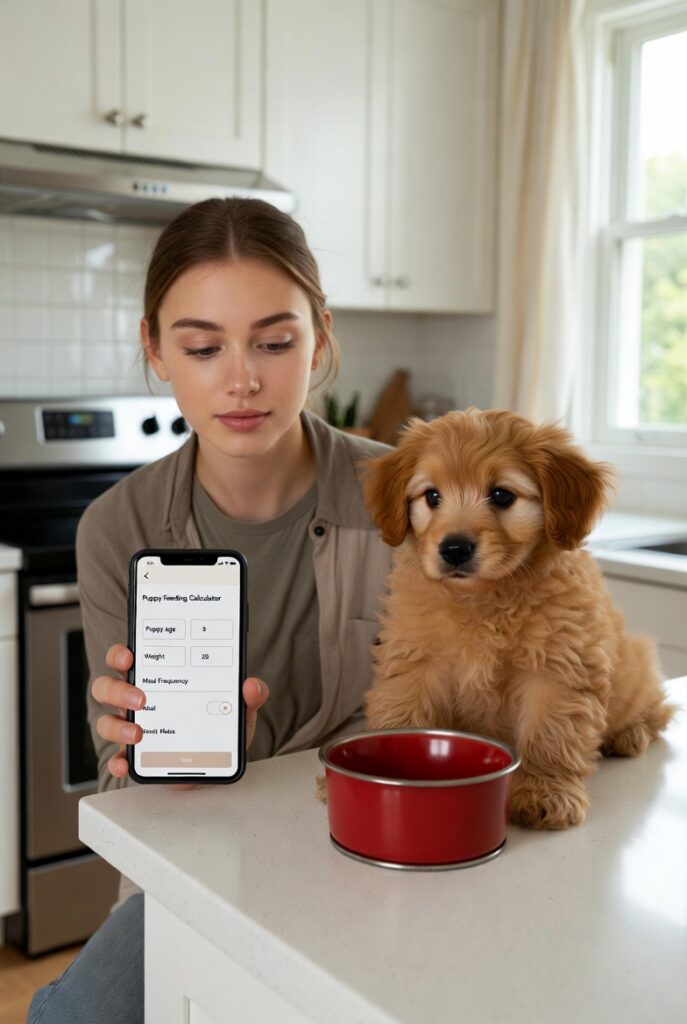
A puppy feeding calculator is simply a tool — available online or used manually — that helps you figure out how many calories your puppy needs per day based on their specific weight, age, and activity level. Let me show you exactly how to use one effectively.
How to Use a Puppy Feeding Calculator
Most reliable online puppy feeding calculators will ask you for the following basic information:
- Your puppy’s current weight in lbs or kg
- Your puppy’s age in weeks or months
- Your puppy’s expected adult weight, often listed by breed average
- Activity level — usually rated as low, moderate, or high
- The type of food you are feeding — dry, wet, raw, or mixed
Once you input these values, the calculator estimates your puppy’s daily caloric need — also called the Resting Energy Requirement or RER — and then converts it into a practical portion size. According to the American Kennel Club, the standard starting formula is: RER = 70 x (body weight in kg) to the power of 0.75. For growth, you then multiply this number by a factor of 2–3 depending on your puppy’s age.
For example, a 5 kg (11 lb) puppy would have an RER of roughly 234 kcal per day. Multiply that by a growth factor of 2.5 for a young, active puppy and you get around 585 kcal per day as a daily target. Then divide that by the calorie count listed on your food bag to get the correct cup amount.
Dog Food Calculator vs. Puppy Feeding Calculator
These two tools are similar in concept but not the same in practice. A standard dog food calculator is designed for adult dogs with maintenance-level calorie needs — it does not account for the faster growth and higher energy demands of puppyhood. A puppy feeding calculator, on the other hand, specifically includes growth factors and age-based adjustments. Therefore, always use a puppy-specific calculator until your dog fully reaches adulthood.
Factors That Change Your Puppy’s Calorie Needs
- Breed size: Smaller breeds have higher calorie needs relative to body weight
- Current weight vs. expected adult weight: A larger expected adult size means a longer, different growth curve
- Activity level: High-energy breeds like Border Collies or Jack Russell Terriers need noticeably more calories
- Food type and brand: Calorie density varies dramatically across different brands and formulas
- Health status: Illness, intestinal parasites, or recovery from surgery can shift daily needs significantly
Sample Puppy Feeding Times for Busy Owners
I know that life gets busy, and not everyone has a perfectly flexible schedule for feeding a young puppy four times a day. The good news is that with a bit of planning upfront, you can absolutely make a consistent feeding routine work — even with a full-time job, a school schedule, or other regular commitments.
Example Feeding Schedule for People Who Work from Home
- 7:00 AM — Morning meal, right after you wake up and before starting your workday
- 12:00 PM — Midday meal during your lunch break
- 5:00 PM — Afternoon meal at the end of your work hours
- 9:00 PM — Evening meal before winding down for the night
This schedule works particularly well if you are home all day. Furthermore, it aligns naturally with your puppy’s bathroom break needs, which makes potty training much more manageable and consistent.
Example Feeding Schedule for School or Office Routines
If you are regularly away from home for 8 or more hours, you will need a bit of extra help to keep meals on schedule. Consider hiring a dog walker or pet sitter for the midday meal, or investing in a quality automatic timed pet feeder for reliable scheduled dispensing throughout the day.
- 7:00 AM — Morning meal before you leave the house
- 12:30 PM — Auto-feeder or midday meal via pet sitter
- 6:00 PM — Evening meal shortly after you return home
- 9:30 PM — Small final meal or treat-based training session before bed
Best Puppy Feeding Times: Morning, Afternoon, and Evening
In my personal experience, spacing meals evenly across a 12-hour window works best for both digestion and consistent energy levels throughout the day. For a 4-meal daily schedule, meals roughly every 3–4 hours is ideal. For a 3-meal schedule, aim for approximately 5–6 hour gaps between each feeding. This approach prevents both hunger-related crankiness and the sluggishness that sometimes follows very large, infrequent meals.
Should Puppies Eat Before Bed?
Yes, I do recommend giving your puppy a small evening meal, but not too close to their actual bedtime. Eating too late can cause nighttime bathroom accidents and may disrupt your puppy’s sleep quality. Generally, the last meal of the day should happen at least 2 hours before you plan to put your puppy to bed. For example, if your puppy’s bedtime is around 10 PM, feed them their last meal no later than 8 PM.
How Often Should a Puppy Eat?
This is closely tied to the age-based schedule covered earlier, but it deserves its own clear summary that you can reference quickly at any point in your puppy’s development.
How Many Times a Day Should You Feed a Puppy
- 6–8 weeks old: 4–5 times per day
- 8–12 weeks old: 4 times per day
- 3–6 months old: 3 times per day
- 6–12 months old: 2–3 times per day, depending on breed size
- 12 months and older: 2 times per day for most adult dogs
When Can Puppies Switch to Two Meals a Day
Most puppies can comfortably transition to two meals a day somewhere between 6 and 12 months of age. However, large and giant breeds should wait until closer to 12 months or even beyond, since they continue growing for much longer and need that extra meal to fuel healthy bone and muscle development. Small breeds, on the other hand, can often make the switch by around 6 months with no problem.
How Feeding Frequency Changes for Small vs. Large Breeds
Small breeds tend to need more frequent, smaller meals throughout puppyhood and sometimes into adulthood, largely due to their very fast metabolisms and higher risk of low blood sugar. Conversely, large breeds can handle bigger, less frequent meals once they reach adulthood. During puppyhood, though, all breeds genuinely benefit from structured, frequent feeding to support stable growth and steady energy throughout the day.
Foods Puppies Should and Should Not Eat
Now that we have covered the schedule side of things thoroughly, let me talk about what actually goes in the bowl. Not all puppy foods are created equal, and some human foods that seem totally harmless can actually be seriously dangerous for your puppy. Before you start, make sure you already have the right gear — check out the Puppy Essentials Checklist to make sure you have everything set up correctly from day one.
Best Types of Puppy Food for Healthy Growth
Look for puppy food clearly labeled ‘complete and balanced’ according to AAFCO (Association of American Feed Control Officials) standards. The very first ingredient listed should always be a specific, named animal protein — such as chicken, beef, or salmon. Avoid foods with vague or suspicious ingredients like ‘meat by-products,’ ‘animal digest,’ or excessive amounts of cheap fillers like corn syrup or artificial preservatives. High-quality puppy food right from the start sets the foundation for a long, healthy, and active life.
Wet Food vs. Dry Food for Puppies
Both wet and dry food have their place in a puppy’s diet, and the best choice really depends on your individual puppy’s needs and preferences. Dry kibble is convenient, cost-effective, better for dental health, and much easier to measure accurately. Wet food, on the other hand, is often more palatable, has a richer smell that picky puppies love, and provides extra hydration through its high moisture content.
Many experienced owners combine both types, which I personally think is a smart approach — use dry kibble as the nutritional base, then mix in a small amount of wet food for added flavor and moisture. This combination often works well for even the pickiest of puppy eaters.
Human Foods Puppies Should Avoid
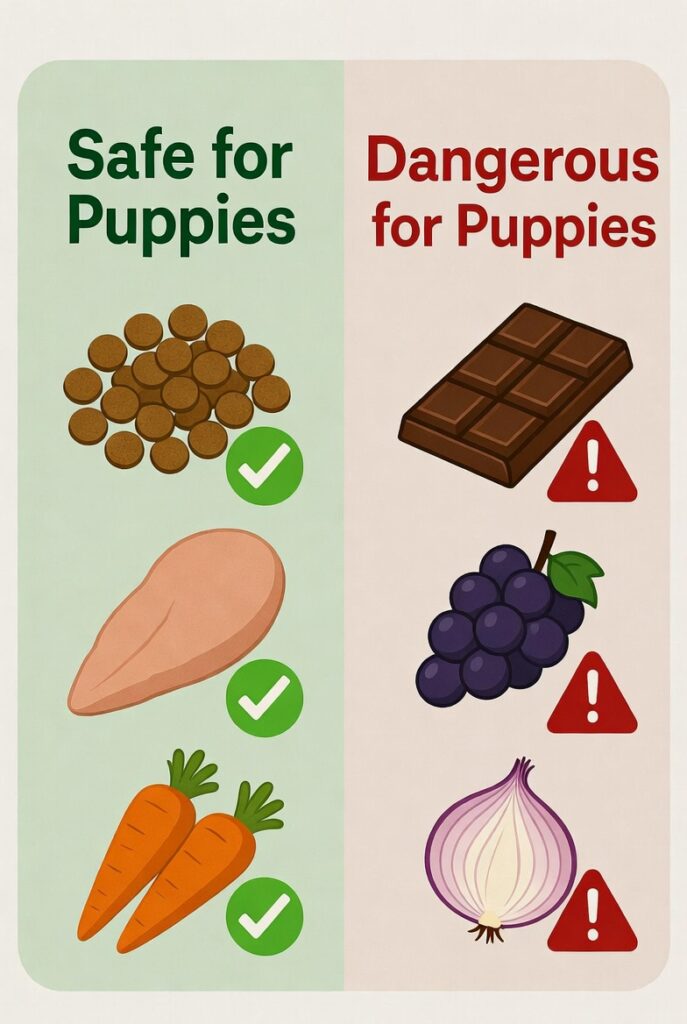
- Chocolate — toxic to dogs, even in small amounts, due to theobromine content
- Grapes and raisins — can cause sudden kidney failure with no safe dose
- Onions and garlic — damage red blood cells and cause anemia over time
- Xylitol — an artificial sweetener found in many gums and candies that is extremely dangerous
- Avocado — contains persin, a compound that is toxic to dogs
- Macadamia nuts — cause weakness, fever, and neurological symptoms
- Cooked bones — splinter easily and can cause internal punctures or blockages
When to Change Puppy Food Brands Safely
If you need to switch food brands for any reason, always do it gradually over a period of 7–10 full days. Start by mixing approximately 25% new food with 75% old food for the first few days, then slowly shift the ratio each day until you are fully on the new food. Switching brands too quickly almost always causes digestive upset, loose stools, and sometimes vomiting. Furthermore, avoid switching food brands during already stressful periods — like a recent move, a new family member, or a scheduled vet visit — since stress by itself already affects a puppy’s digestion significantly.
Common Puppy Feeding Mistakes to Avoid
Even the most dedicated and loving puppy parents make feeding mistakes, especially in those early weeks when everything is new and overwhelming. Here are the most common ones I have seen — and exactly how to avoid them going forward.
Free-Feeding Instead of Scheduled Meals
Free-feeding means leaving food out in your puppy’s bowl all day long for them to eat whenever they feel like it. While it sounds convenient, it actually makes it nearly impossible to monitor how much your puppy is eating, completely disrupts potty training schedules, and very often leads to significant overeating. Scheduled, measured meals are always the healthier and smarter option.
Giving Too Many Treats
Treats should never make up more than 10% of your puppy’s total daily caloric intake. When you give more than this, treats start to displace the balanced nutrition from their main meals, leading to nutritional gaps over time. Use treats strategically and intentionally for training sessions, but always factor the treat calories into your puppy’s total daily food amount.
Feeding Adult Dog Food Too Early
Adult dog food is formulated specifically for maintenance nutrition in fully grown dogs — not for the rapid growth and high energy demands of a young puppy. It lacks the higher levels of protein, healthy fats, and key minerals that puppies need during their development. Therefore, keep your puppy on a high-quality puppy-specific formula until your vet advises making the switch — typically around 12 months for most breeds and 18–24 months for giant breeds.
Ignoring Weight Gain or Digestive Problems
Sudden unexplained weight gain or recurring loose stools are not things to simply wait out and hope resolve on their own. These can indicate overfeeding, food intolerance, parasites, or other underlying health issues that need addressing. Always take these signs seriously and bring them up with your vet sooner rather than later.
Changing Foods Too Quickly
As I mentioned in the food types section, abrupt food changes are one of the most common causes of puppy digestive upset. Always transition slowly over a full 7–10 days minimum. If your puppy develops diarrhea during the transition, slow the process down even further — sometimes a 14-day transition is necessary for puppies with more sensitive digestive systems.
When to Ask a Vet About Your Puppy’s Feeding Schedule
General feeding guidelines are a solid and valuable starting point for every new puppy owner. However, every puppy is an individual with their own needs, and there are certain situations where professional veterinary input is truly necessary rather than optional.
Signs Your Puppy Is Underweight
- Visible ribs, spine, or hip bones that are easy to see without pressing
- Sunken or hollow appearance around the face, abdomen, or flanks
- Lethargy and noticeably low energy even after eating regular meals
- Growth rate significantly slower than breed average expectations
Signs Your Puppy Is Over weight
- No visible waist definition when viewed from directly above
- Difficulty feeling individual ribs through a thick layer of fat
- Reluctance or refusal to exercise, run, or engage in play
- Heavy breathing or panting after only light, brief activity
Digestive Issues That May Require a Feeding Adjustment
Persistent diarrhea lasting more than a day or two, repeated vomiting, excessive gas, or any blood in the stool are all clear reasons to contact your vet promptly. These symptoms can indicate food intolerance, intestinal parasites, bacterial infections, or more serious gastrointestinal conditions. In these cases, your vet may recommend a prescription diet, an elimination food trial, or additional diagnostic testing to identify the root cause.
Breed-Specific Feeding Concerns
Some breeds have unique nutritional requirements that go beyond general guidelines. Large breeds need carefully controlled calcium intake to prevent developmental orthopedic disease. Flat-faced breeds like Bulldogs or French Bulldogs may eat more slowly and do better with wide, shallow bowls. Deep-chested breeds such as Great Danes are at higher risk of gastric dilatation-volvulus (bloat), so multiple small meals per day and avoiding vigorous exercise right after eating are both critically important. If you are a first-time dog owner, I’d recommend starting with Dog as a Pet: Everything You Need to Know Before Getting One for a broader overview of breed-specific considerations.
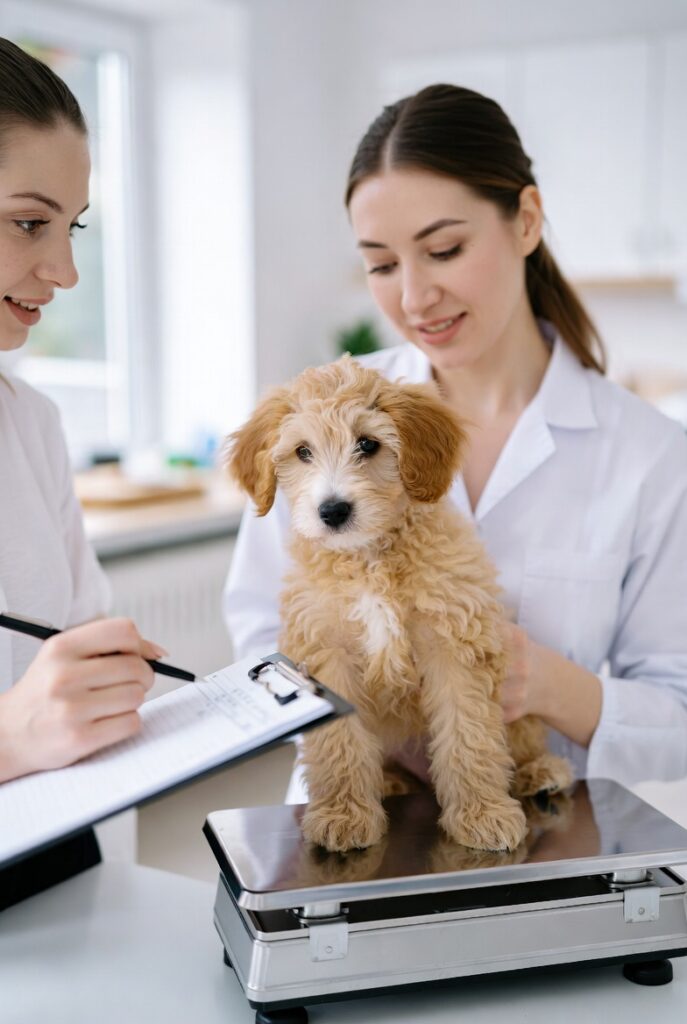
Conclusion
Setting up the best puppy feeding schedule does not have to be complicated or overwhelming. In fact, once you understand your puppy’s age, current weight, and breed size, the right routine becomes quite straightforward to establish. The key is consistency — feed at the same times every single day, measure portions carefully with each meal, and monitor your puppy’s body condition as they grow week by week.
Remember that these guidelines are a strong and reliable foundation, but every puppy is ultimately an individual with their own rhythm. Therefore, I always recommend checking in with your vet at least every couple of months during that important first year to make sure your puppy is on track. A vet can fine-tune your feeding plan based on real growth data, current health status, and any breed-specific needs that may apply.
As your puppy grows, so will your confidence as a pet parent. Moreover, a well-fed, healthy, and energetic puppy is the most rewarding thing in the world — and that makes all the effort and attention to detail absolutely worth it. You have got this!
Got questions about your puppy’s specific feeding needs? Leave a comment below or speak with your veterinarian for a fully personalized plan built around your puppy’s unique situation. Your puppy is lucky to have someone who cares this much. 🐾
Frequently Asked Questions About Puppy Feeding
How often should a puppy eat each day?
It depends entirely on your puppy’s age. Puppies under 8 weeks need 4–5 meals per day. From 8–12 weeks, 4 meals is the standard. Between 3 and 6 months, reduce to 3 meals. From 6–12 months, 2–3 meals per day works well depending on breed size. Adult dogs typically do best with 2 meals per day.
How much should I feed my puppy?
The right amount depends on your puppy’s current weight, their age, their expected adult size, and the calorie density of the specific food you are feeding. Use the feeding chart in this guide as a starting point, then adjust based on your puppy’s body condition score and your vet’s recommendations over time.
How much to feed a puppy by weight?
In general, younger puppies need approximately 5–10% of their body weight in food per day, split evenly across all meals. As they grow older and larger, this percentage gradually decreases. Always cross-reference your estimate with both the feeding guidelines on your food’s packaging and your veterinarian’s advice.
How many times a day should a puppy eat?
Most puppies under 6 months should eat 3–4 times per day for proper nutrition and stable energy. After 6 months, twice daily is generally sufficient for most breeds. However, small breeds may benefit from continuing with 3 meals a day for a bit longer due to their naturally fast metabolism.
Can puppies eat twice a day?
Yes, but generally not until they are at least 6 months old for small breeds, or 9–12 months for larger breeds. Before reaching these age milestones, twice a day is too infrequent and can cause uncomfortable blood sugar dips and increased hunger, especially in toy and small breeds.
Should puppies have food available all day?
No. Free-feeding — leaving food out all day — is not recommended for puppies. It makes accurate portion control very difficult, interferes with potty training schedules, and frequently leads to overeating. Scheduled, measured meals are significantly better for your puppy’s digestion, behavior, and long-term health.
What is the best puppy feeding schedule for large breeds?
Large breed puppies should eat 3–4 times per day until around 9–12 months of age, then transition gradually to twice daily. Use a specially formulated large-breed puppy food that controls calcium and phosphorus levels to support healthy, steady bone growth and reduce the risk of developmental joint problems.
When should puppies switch to adult dog food?
Most puppies are ready to transition to adult dog food at around 12 months of age when growth slows significantly. However, giant breeds such as Great Danes, Mastiffs, and Saint Bernards should remain on puppy food until they are 18–24 months old. Always consult your vet before making any food formula changes to ensure the timing is right for your specific puppy.