If you’ve ever stood up from your sofa and looked like you just wrestled a fluffy blanket, I completely understand. Before I did serious research into small dog breeds that don’t shed or smell, my apartment was covered in dog hair. There was fur on every dark shirt, a faint dog smell embedded into the cushions, and a vacuum cleaner that worked overtime. It wears you down fast.
Here’s the good news: certain small dog breeds are naturally low-shedding and produce very little body odour. These dogs have hair instead of fur, slower growth cycles, and lower skin oil production — which translates directly to a cleaner, fresher-smelling home.
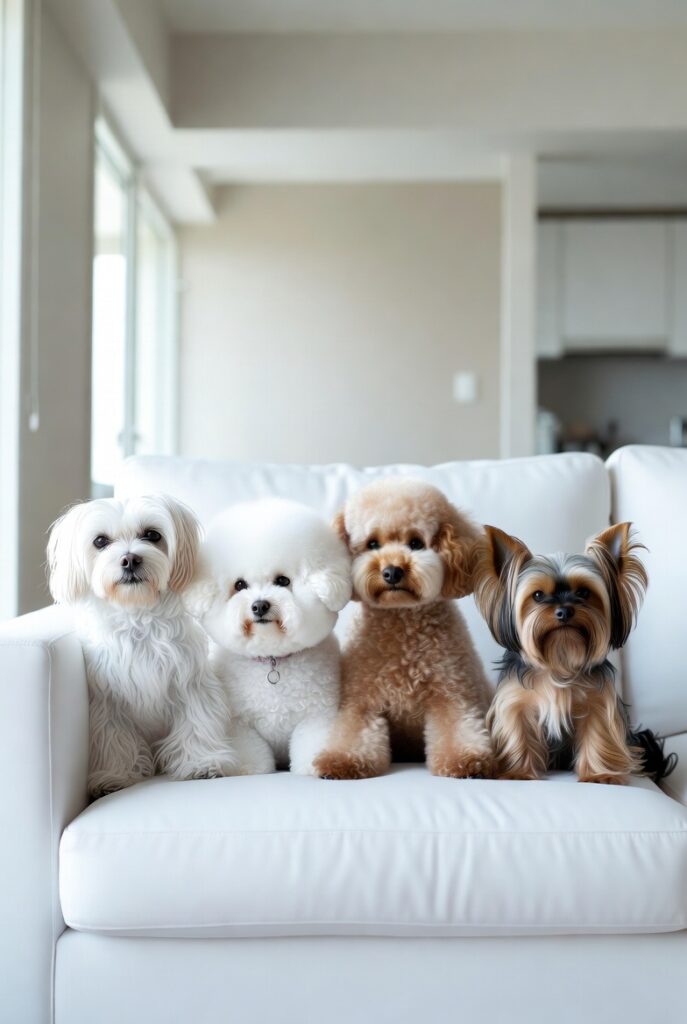
Now, I want to be clear about something upfront: ‘non shedding dogs’ is partly a marketing term. Every dog loses some hair — it’s biological. What we’re really talking about are low shedding dogs whose loose strands stay caught in the coat rather than drifting onto your furniture and clothes. These no shed dogs, small enough for apartment living, also tend to be much kinder on allergy sufferers.
In this guide, I’ll walk you through 12 of the best small dog breeds that don’t shed or smell much, compare them in a side-by-side table, answer the most common questions, and help you figure out which breed actually fits your lifestyle. Let’s get into it.
Quick Answer: Best Small Dog Breeds That Don’t Shed or Smell
Short on time? Here are the top picks at a glance, along with what each is best known for:
| Breed | Best For | Shedding Level | Odor Level |
| Maltese | Apartments & seniors | Very Low | Very Low |
| Miniature Poodle | Allergy sufferers | Minimal | Very Low |
| Bichon Frise | Families with kids | Very Low | Low |
| Shih Tzu | Quiet apartment life | Low | Low |
| Yorkshire Terrier | Seniors & small spaces | Very Low | Very Low |
| Havanese | Families & active homes | Low | Low |
| Coton de Tulear | Quiet, calm households | Very Low | Very Low |
💡 Pro Tip: ‘Non shedding’ doesn’t mean ‘no grooming.’ Most of these breeds need brushing several times a week and professional grooming every 6–8 weeks. Factor that into your decision.
Who This Guide Is Best For
Before I cover the breeds in detail, let me help you figure out whether this guide is pointing you in the right direction. Not every non shedding small dog suits every lifestyle — and matching personality to lifestyle matters far more than coat type alone.
Families Looking for Kid-Friendly Dogs
If you’ve got children at home, you need a dog with genuine patience and a forgiving temperament, not just a hypoallergenic coat. Small dog breeds that don’t shed and are good with kids need to be sturdy enough for a child’s energy, naturally friendly with strangers, and slow to snap under pressure. The Bichon Frise and Havanese consistently top my list for this group — they genuinely love the chaos that kids bring and rarely show aggression.
Apartment Owners Who Need Quiet Dogs
Living in close quarters means you need a dog that isn’t going to launch into a barking marathon every time a neighbour passes. Some small dog breeds that don’t shed or bark are genuinely calm and quiet indoors. The Basenji cannot bark in the traditional sense. The Shih Tzu and Maltese also tend to be much quieter than most toy breeds, making them strong choices for apartment and condo living.
People With Allergies or Sensitivity to Pet Hair
If you or someone at home sneezes around dogs, the good news is that dogs that don’t shed distribute far less dander into the air. Low shedding dogs keep dander closer to the coat, which significantly reduces the airborne allergen load in your home. That said, no dog is 100% hypoallergenic — I’ll explain the distinction clearly in the next section so you don’t get caught out by misleading breed descriptions.
Busy People Who Want Low-Maintenance Pets
Maybe you work long hours or simply don’t have time to vacuum daily and book monthly grooming appointments. Some low-shedding small breeds are genuinely lower maintenance than others — but it varies significantly. The Basenji, for example, needs almost zero grooming. The Bichon Frise needs quite a lot. I’ll flag this clearly for each breed so you can make an informed decision.
If you’re considering dog ownership for the first time, I strongly recommend reading Dog as a Pet: Everything You Need to Know Before Getting One before committing — it’ll save you a lot of surprises.
What ‘Non-Shedding’ Really Means
No Dog Is Truly 100% Shed-Free
Here’s something most breed lists skip over: there is no such thing as a completely shed-free dog. Every dog loses some hair — it’s biological. The real difference comes down to hair vs fur. Dogs with fur have a dense undercoat that releases in seasonal waves, leaving clumps on your furniture. Dogs with hair have a single, continuously growing coat that only loses individual strands gradually — much like human hair.
Breeds like the Miniature Poodle, Maltese, and Yorkshire Terrier all have hair rather than fur. Consequently, instead of shedding onto your sofa, loose strands stay trapped in the coat itself. That’s actually why regular brushing is so critical for these breeds — if you skip it, the trapped hair mats up and causes painful skin problems.
Why Some Small Dogs Smell Less Than Others
Dog odour mainly comes from a few sources: skin oil production (sebum), ear infections, dental disease, and coat buildup. Some breeds produce significantly more sebum than others — Basset Hounds and Bulldogs are famous for this. By contrast, dogs like the Maltese and Bichon Frise naturally produce less oil, which means they stay fresher between baths without much effort.
Coat type also plays a major role in odour management. A tight curly coat traps dirt and moisture. A silky flat coat dries faster and collects less debris. An open double coat picks up everything from the environment. For consistently low odour, silky or curly single-layer coats tend to be the best performers — as long as they’re groomed on a consistent schedule.
Low Shedding Dogs vs Hypoallergenic Dogs
These two terms get mixed up constantly, and the confusion causes real problems. A low shedding dog sheds very little hair — which means less dander accumulating on your furniture and in the air. A hypoallergenic dog is one described as less likely to trigger allergic reactions. However, allergies are triggered by the protein Can f 1, which is found in dog saliva and skin cells (dander) — not just hair.
The honest truth is that no dog breed is certified hypoallergenic. However, low shedding small breed dogs do distribute less dander overall, which is why so many allergy-sensitive households manage much better with them. The Miniature Poodle and Chinese Crested are the two most widely recommended options for people with sensitivities, and for good reason.
💡 Expert Note: According to the American Kennel Club (AKC), even breeds marketed as hypoallergenic can trigger reactions in sensitive individuals. Always spend time with a specific dog before bringing one home if allergies are a serious concern.
12 Best Small Dog Breeds That Don’t Shed or Smell Much
I’ve personally researched every breed below, and in many cases spent time with them directly. Each profile covers the same key areas so you can compare breeds consistently and efficiently.
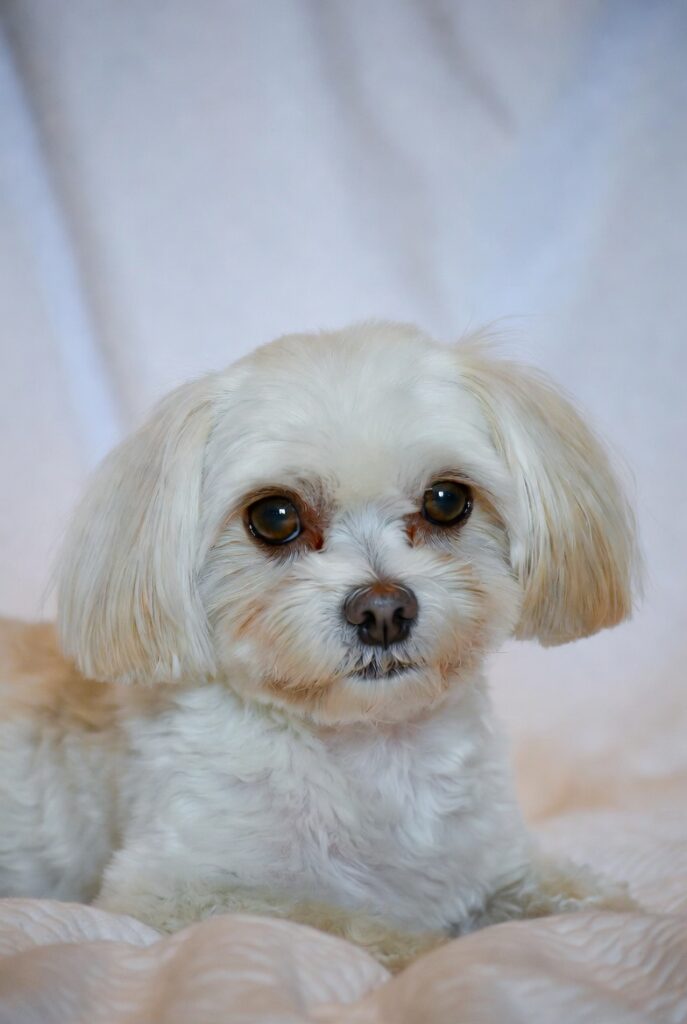
1. Maltese
- Size: 4–7 lbs | Toy breed
- Shedding Level: Very Low — long silky hair rather than fur; minimal loose strands
- Smell Level: Very Low — produces very little skin oil; stays fresh between baths
- Grooming Needs: High — daily brushing strongly recommended; professional grooming every 6–8 weeks
- Energy Level: Moderate — playful indoors; content with short daily walks
- Best For: Apartments, seniors, first-time owners, quiet households
- Downsides: Prone to tear staining; coat mats quickly if brushing is skipped
The Maltese is one of the most beloved miniature dog breeds for good reason. It’s gentle, deeply affectionate, and naturally one of the least smelly dogs you’ll find. The long white coat is beautiful — but it’s demanding. Many owners keep it in a short ‘puppy cut’ to make daily maintenance far more manageable. If you want a low-shedding companion for a small space, this is a top pick.
2. Miniature Poodle
- Size: 10–15 lbs | Small-medium breed
- Shedding Level: Minimal — tight curly coat traps loose hair before it reaches your furniture
- Smell Level: Very Low — dry coat texture and low oil production
- Grooming Needs: High — requires professional clipping every 6–8 weeks
- Energy Level: High — very active and intelligent; needs daily mental and physical stimulation
- Best For: Allergy sufferers, active families, apartment dwellers who exercise regularly
- Downsides: Gets bored easily; needs consistent training and stimulation
The Miniature Poodle is arguably the gold standard of non shedding dogs. It’s brilliantly intelligent, highly trainable, athletic, and produces very little dander. Many allergy-sensitive households do extremely well with this breed compared to almost anything else. The curly coat does require regular professional clipping, but the payoff is a genuinely clean, nearly odourless home companion. It’s also consistently rated as one of the best dog breeds for first-time owners who are prepared to stay on top of training.
3. Bichon Frise
- Size: 12–18 lbs
- Shedding Level: Very Low — soft double coat holds shed hair internally
- Smell Level: Low — needs bathing every 3–4 weeks to stay at its freshest
- Grooming Needs: High — professional grooming required; coat mats without regular brushing
- Energy Level: Moderate — playful and affectionate; loves people
- Best For: Families with kids, allergy households, apartment living
- Downsides: High ongoing grooming cost; prone to skin allergies and tear staining
The Bichon Frise is one of my favourite recommendations for families. It’s cheerful, endlessly adaptable, and genuinely patient with children — it’s consistently among the top small dog breeds that don’t shed and are good with kids. However, the fluffy white coat requires professional attention every 4–6 weeks. Don’t expect to manage it purely with at-home brushing. Budget for grooming appointments from day one.
4. Shih Tzu
- Size: 9–16 lbs
- Shedding Level: Low — double coat sheds minimally when kept well-maintained
- Smell Level: Low — but facial skin folds must be cleaned daily to avoid odour
- Grooming Needs: High — daily face cleaning essential; professional grooming every 6–8 weeks
- Energy Level: Low-Moderate — calm, affectionate, and content indoors
- Best For: Apartments, seniors, quiet households, first-time owners
- Downsides: Facial fold infections if cleaning is neglected; tendency to snore
The Shih Tzu was literally bred to be a companion dog for Chinese royalty — and it shows. It adapts brilliantly to small spaces, rarely barks excessively, and thrives on human company. The main maintenance task is the face: those adorable skin folds trap moisture and can smell noticeably if not cleaned daily. Stay consistent with face cleaning and grooming, and you’ll have one of the most low-maintenance apartment dogs on this entire list.
5. Yorkshire Terrier
- Size: Under 7 lbs | One of the smallest dog breeds
- Shedding Level: Very Low — fine silky hair rather than fur
- Smell Level: Very Low — naturally among the least-smelling small dog breeds
- Grooming Needs: Moderate-High — silky coat tangles easily without regular brushing
- Energy Level: Moderate — spirited and bold despite tiny size
- Best For: Seniors, apartment dwellers, urban living, small households
- Downsides: Can be stubborn; some individuals prone to excessive barking
Don’t let the size fool you — the Yorkshire Terrier has the personality of a dog three times its weight. It’s one of the best little dog breeds for people who want genuine character combined with near-zero shedding. The fine silky coat barely sheds at all, and natural body odour is almost nonexistent. Just be ready for a confident, occasionally stubborn personality — Yorkies genuinely have no idea how small they are.
6. Havanese
- Size: 7–13 lbs
- Shedding Level: Low — wavy silky coat holds loose hair well
- Smell Level: Low — clean-smelling breed; benefits from regular bathing
- Grooming Needs: Moderate — brushing 2–3 times a week is sufficient
- Energy Level: Moderate — playful, social, and people-oriented
- Best For: Families with children, apartment dwellers, social households
- Downsides: Prone to separation anxiety; doesn’t do well when left alone for long periods
The Havanese is a social butterfly in dog form. It’s friendly, adaptable, and exceptionally good with children — which is exactly why it ranks so highly among small dog breeds that don’t shed and are good with kids. The silky wavy coat is also more forgiving in terms of at-home maintenance compared to the Bichon or Poodle, which makes it a more realistic option for owners who can’t commit to heavy grooming schedules.
7. Coton de Tulear
- Size: 8–15 lbs
- Shedding Level: Very Low — cotton-like coat catches loose strands effectively
- Smell Level: Very Low — genuinely one of the cleanest-smelling toy breeds
- Grooming Needs: Moderate-High — daily brushing required to prevent matting
- Energy Level: Moderate — easygoing, happy, and adaptable
- Best For: Quiet households, apartments, older owners, calm families
- Downsides: Less commonly available; may require a longer search or waitlist
The Coton de Tulear is a hidden gem among small non shedding dogs. Its fluffy cotton-like texture is unique and absolutely distinctive. Once you get into a grooming routine, the coat is surprisingly manageable. More importantly, the Coton is among the quietest and most even-tempered toy breeds — far less prone to the anxious barking that plagues many other small dogs. It’s a genuinely underrated choice.
8. Miniature Schnauzer
- Size: 11–20 lbs | Slightly larger within the small breed category
- Shedding Level: Low — wiry outer coat produces minimal loose hair
- Smell Level: Low-Moderate — the beard area traps food and moisture and needs frequent cleaning
- Grooming Needs: Moderate — stripping or clipping required every 8–10 weeks
- Energy Level: High — energetic, playful, and very alert
- Best For: Active families, people who want a spirited and confident companion
- Downsides: Beard requires frequent washing to avoid odour; can be quite vocal
If you want a dog with real personality — playful, curious, bold — the Miniature Schnauzer delivers. It’s consistently one of the most popular small breed dogs globally. The wiry coat doesn’t shed much, and with proper grooming stays clean and tidy. The beard, however, needs attention after every meal to avoid smell buildup. It’s also an alert and confident companion — excellent if you want a dog that notices everything going on around it.
9. Brussels Griffon
- Size: 8–10 lbs
- Shedding Level: Low (rough coat) to Moderate (smooth coat)
- Smell Level: Low — generally clean and fresh
- Grooming Needs: Moderate — rough coat benefits from hand-stripping twice a year
- Energy Level: Moderate — playful but not overly demanding
- Best For: Singles, couples, small apartments, people who want a distinctive-looking dog
- Downsides: Strong-willed personality; can be stubborn without consistent training
The Brussels Griffon has an almost human-like face that makes people stop and stare on the street. It’s charming, deeply loyal, and not a heavy shedder — especially in the rough-coated variety. This is one of the more overlooked tiny dog breeds, but owners who discover it tend to become devoted fans. The personality is genuinely amusing and endearing once you earn its trust.
10. Chinese Crested
- Size: 8–12 lbs
- Shedding Level: Hairless variety — essentially zero; Powderpuff variety — very low
- Smell Level: Very Low — among the lowest of any dog breed
- Grooming Needs: Low (hairless) to Moderate (Powderpuff)
- Energy Level: Moderate — playful and affectionate, adaptable to many lifestyles
- Best For: Severe allergy sufferers, unique dog lovers, warm climates
- Downsides: Hairless variety requires sunscreen outdoors and moisturiser for skin care; sensitive to cold
For allergy sufferers who can’t tolerate even low dander levels, the hairless Chinese Crested is as close to a truly shed-free dog as exists. The skin care requirements are real — sunscreen for outdoor time, regular moisturising, and warmth in cold weather — but many owners say the trade-off is completely worth it for a genuinely hair-free household. The Powderpuff variety has a soft coat and is also very low-shedding.
11. West Highland White Terrier (Westie)
- Size: 15–22 lbs | On the larger end of small breeds
- Shedding Level: Low — wiry double coat sheds minimally
- Smell Level: Low — clean coat with a mild natural terrier scent
- Grooming Needs: Moderate — clipping or stripping every 8 weeks
- Energy Level: High — a true terrier; loves exploring and outdoor activity
- Best For: Active families, people with access to outdoor space, experienced dog owners
- Downsides: Strong prey drive; can be stubborn and prone to digging
The Westie is a robust and characterful little dog. It’s one of the most popular low shedding dogs in the UK and increasingly well-known globally. The white wiry coat doesn’t shed excessively, and with consistent grooming stays clean and surprisingly odourless. Just be ready for a dog that needs genuine physical exercise and mental engagement — this is not a lap dog, despite its size.
12. Basenji
- Size: 22–24 lbs | Small-medium; slightly larger than toy breeds but included for its exceptional profile
- Shedding Level: Very Low — extremely short, fine, close coat
- Smell Level: Virtually None — self-grooms like a cat; widely regarded as the least-smelling dog breed
- Grooming Needs: Very Low — occasional wipe-down; almost no professional grooming required
- Energy Level: Very High — needs significant daily exercise; strongly athletic
- Best For: Active owners who want virtually zero grooming and zero odour
- Downsides: Highly independent and stubborn; escape artist; not recommended for first-time dog owners
The Basenji is genuinely extraordinary. It doesn’t bark — it makes a unique yodel-like sound called a ‘baroo.’ It self-grooms like a cat. And it produces almost zero detectable odour. The coat is so short and clean that most owners report they’ve never noticed any shedding whatsoever. I’ve included it on this list despite being slightly larger because the grooming profile is simply unmatched among all small dog breeds. However, be honest with yourself about its independence and energy needs before committing.
Best Small Dogs That Don’t Shed for Specific Needs
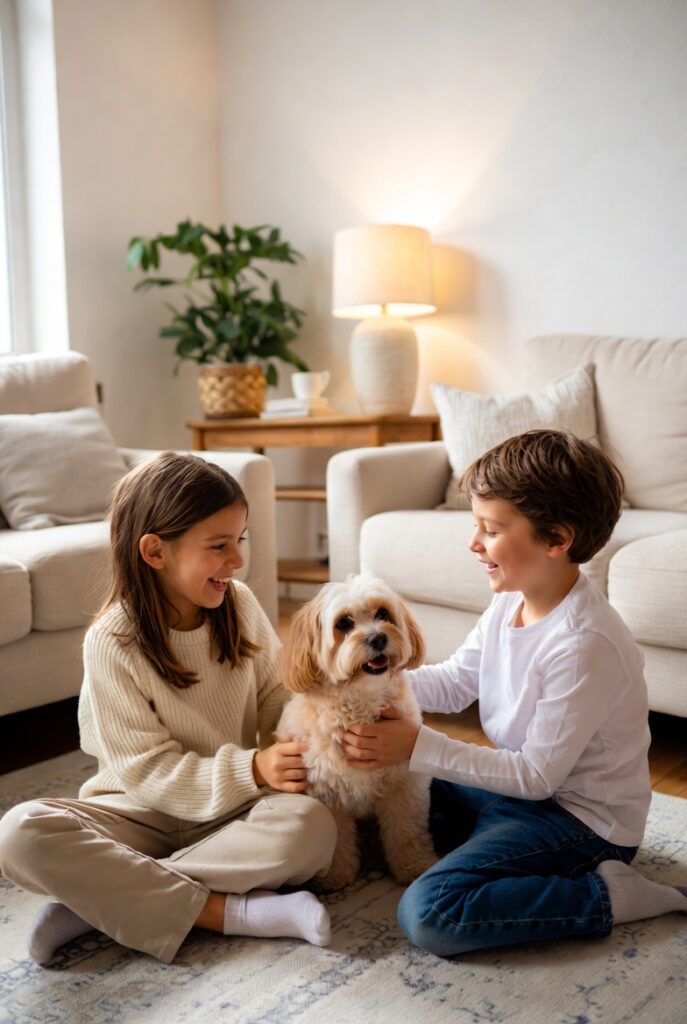
Best Small Dog for Families With Kids
When children are involved, temperament absolutely matters more than coat type. You want a patient, gentle, resilient dog that recovers quickly from the unpredictable energy of kids. My top two picks for this specific situation are:
- Bichon Frise — endlessly patient, joyful, and practically designed for family life
- Havanese — social, warm, and genuinely energised by the presence of children
Both rank consistently as top small dog breeds that don’t shed and are good with kids. Both are forgiving of accidental rough handling. Still, always teach children to respect the dog — no breed enjoys being startled or grabbed.
Best Small Dog for Apartment Living
Apartment dogs need to be calm, adaptable, and ideally not prone to excessive barking. They also shouldn’t require long daily runs. My two strongest recommendations here are:
- Shih Tzu — genuinely calm, quiet, and perfectly adapted to small indoor spaces
- Maltese — tiny, gentle, and completely content with a short walk and indoor playtime
Both are popular no shed dogs small enough to thrive in any apartment. Both manage well on minimal outdoor exercise. If noise is your primary concern, the Shih Tzu edges ahead as one of the quieter options in this category.
Best Small Dog for Allergy Sufferers
If allergies are your main driver, focus on single-coated breeds with minimal dander production:
- Miniature Poodle — widely considered the gold standard for allergy households; minimal dander, near-zero shedding, low odour
- Chinese Crested (hairless) — for severe cases, essentially eliminates shedding-related dander entirely
Remember: allergies respond to the protein Can f 1 in saliva and dander — not just hair. So even non shedding dogs can trigger reactions. Spending time with a specific dog before bringing it home is essential if allergies are serious.
Best Small Dog That Doesn’t Bark Much
Not every small dog is a yapper — but many are. If barking is your top concern, seriously consider:
- Basenji — literally cannot produce a traditional bark; makes a soft, unusual yodel sound instead
- Coton de Tulear — one of the calmest and quietest toy breeds available
Both are strong examples of small dog breeds that don’t shed or bark, making them ideal for noise-sensitive living environments.
Best Small Dog for Seniors
Seniors generally benefit from a dog that is calm, affectionate, low on exercise demands, and easy to manage physically day to day. That points clearly toward:
- Yorkshire Terrier — small, gentle, and happy with light daily walks
- Maltese — devoted, physically tiny, and content to simply be near its owner
Both are among the lightest and most manageable miniature dog breeds, which matters significantly over a dog’s 12–15-year lifespan.
If you’re new to dog ownership, our guide on Best Dog Breeds for First-Time Owners covers realistic expectations with full honesty.
Small Dog Breeds Comparison Table
Use this table to quickly compare all 12 breeds on the dimensions that matter most to your decision:
| Breed | Shedding | Odor | Grooming | Kid Friendly | Apt. Friendly | Barking |
| Maltese | Very Low | Very Low | High | Yes | Yes | Low |
| Mini Poodle | Minimal | Very Low | High | Yes | Yes | Low |
| Bichon Frise | Very Low | Low | High | Yes | Yes | Low-Med |
| Shih Tzu | Low | Low | High | Yes | Yes | Low |
| Yorkshire Terrier | Very Low | Very Low | Mod-High | Yes | Yes | Med |
| Havanese | Low | Low | Moderate | Yes | Yes | Low |
| Coton de Tulear | Very Low | Very Low | Mod-High | Yes | Yes | Low |
| Mini Schnauzer | Low | Low-Med | Moderate | Yes | Yes | Med-High |
| Brussels Griffon | Low | Low | Moderate | Yes | Yes | Low |
| Chinese Crested | None/Low | Very Low | Low-Mod | Yes | Yes | Low |
| Westie | Low | Low | Moderate | Yes | Moderate | Med |
| Basenji | Very Low | None | Very Low | Moderate | Moderate | None |
Common Mistakes People Make When Choosing a Non-Shedding Dog
Assuming Non-Shedding Means No Grooming
This is the mistake I see most often, and it genuinely catches people off guard. Many no shed dogs actually require more grooming than heavy shedders — not less. The Miniature Poodle, Bichon Frise, and Maltese all need professional grooming every 6–8 weeks because their hair keeps growing continuously. Skip those appointments and you end up with painful mats, skin infections, and a genuinely uncomfortable dog.
Low shedding dogs hold their hair in the coat. Therefore, regular brushing and periodic professional cuts are non-negotiable for most of the breeds on this list. Going in with that expectation saves a lot of frustration.
Ignoring Temperament and Energy Levels
People often select a dog based on size and shedding profile, then discover too late that the energy level is completely incompatible with their lifestyle. Some tiny dog breeds — the Miniature Schnauzer, Yorkshire Terrier, and Westie in particular — are genuinely high-energy dogs in small packages. If you want a calm lap dog and you choose a Westie, you’ll both end up frustrated.
Always research temperament alongside coat type. A good personality match will make you far happier long-term than a perfect shedding profile paired with an incompatible energy level.
Choosing Based Only on Appearance
I see this regularly: someone falls in love with the Chinese Crested’s unique look, brings one home, and then discovers the hairless variety requires sunscreen, regular moisturising, and protection from cold. Or someone gets a Shih Tzu purely for the cute face, not realising the skin folds need cleaning every single day.
Cute does not always mean easy. Every breed has quirks and real maintenance requirements. Do your homework thoroughly before letting appearances make the decision for you.
Not Considering Grooming Costs
Let’s be direct about money. Professional grooming for small breeds typically runs $40–$90 per session, and most low-shedding small breeds need it every 6–8 weeks. That works out to roughly $300–$750 per year in grooming alone, before food, vet care, and supplies. This is absolutely manageable — but it needs to be budgeted for, not discovered as a surprise.
💡 Budgeting Reminder: For a full first-year cost breakdown, see our Puppy Essentials Checklist — it covers every expense you’ll realistically face in year one.
See also:Puppy Essentials Checklist for a realistic first-year cost overview.
Beginner-Friendly Checklist Before Bringing Home a Small Non-Shedding Dog
Before you finalise your breed decision, work through this checklist honestly:
- Do you live in an apartment or a house with outdoor space?
- Are there children at home, and how young are they?
- Does anyone in the household have allergies or asthma?
- What is your realistic monthly grooming budget? ($40–$90 per professional session)
- How much time can you genuinely commit to daily walks and exercise?
- Can you tolerate some barking, or do you need a quiet breed?
- Do you prefer a cuddly lap dog or a more active, independent companion?
- Are you adopting from a rescue or buying from a breeder?
- What is your local climate? Hairless breeds need warmth and sun protection.
- Will someone be home most of the day, or will the dog be alone for hours?
💡 If the answer to the last question is ‘alone for hours,’ consider the Basenji or Shih Tzu — both are notably more independent than breeds like the Bichon or Havanese, which struggle significantly with prolonged solitude.
For new dog owners: our Complete Puppy Care Guide for Beginners covers everything you need to know before and after bringing your dog home.
Grooming Tips to Keep Small Dogs From Smelling
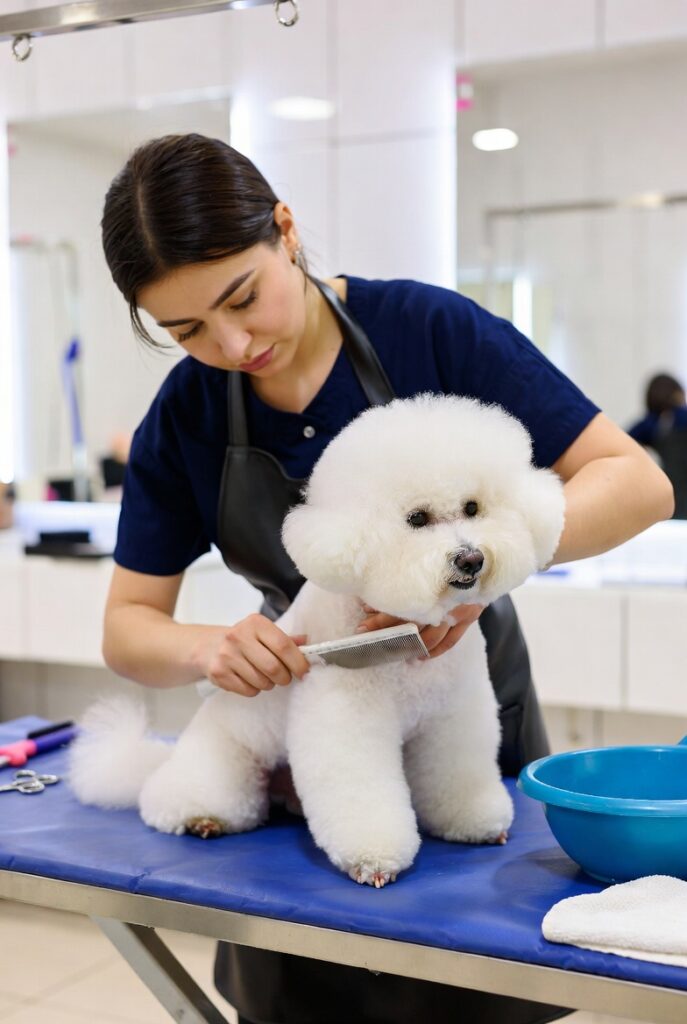
Even the naturally cleanest dog will develop odour without consistent care. Here’s what actually works:
Bathing Schedule
Most small non shedding dogs do best with a bath every 3–4 weeks. Bathing more frequently than this strips natural skin oils and can paradoxically make odour worse over time. Always use a mild, dog-specific shampoo. After bathing, dry the coat completely — damp coats develop a musty smell quickly, particularly in tight curly coats like those of the Bichon or Poodle.
Ear Cleaning
Dogs with floppy ears or hair-filled ear canals — the Maltese, Bichon, Poodle, Shih Tzu — are all prone to ear infections, which are a significant and often overlooked source of dog odour. Check the ears weekly. Redness, dark discharge, or an off smell all warrant a vet visit. Clean healthy ears gently with a dog-specific ear cleaner every 2–4 weeks.
Dental Care
Bad breath in small dogs is one of the most common owner complaints — and it’s almost entirely preventable. Small breeds are especially vulnerable to dental disease because their teeth are crowded into a smaller jaw. Brush your dog’s teeth at least 2–3 times per week using dog-specific toothpaste. Dental chews help but are not a substitute for brushing. Many vets recommend annual professional dental cleanings for small breeds as a standard part of healthcare.
Brushing Routine
For low shedding dogs with continuously growing hair — Poodle, Maltese, Bichon, Havanese — brush 3–5 times per week minimum. Use a slicker brush first, then follow with a metal comb to check for tangles close to the skin. For wiry-coated breeds like the Schnauzer or Westie, once a week is usually sufficient to prevent matting.
Diet and Skin Health
Diet directly influences skin health and therefore coat odour. Feed a high-quality food with a real protein source listed first. Omega-3 fatty acid supplements — fish oil is the most practical source — dramatically improve coat condition and reduce skin oil imbalance over time. If your dog smells bad consistently despite regular grooming, diet is almost always the first variable worth investigating.
When Dog Odor Signals a Health Problem
Sometimes persistent smell is not a grooming issue at all — it’s a health signal. A yeasty or corn-chip odour often indicates a yeast infection in the paws or ears. A fishy smell can point to anal gland issues. A sweet, fruity smell can be an early indicator of diabetes. If your dog has unexplained persistent odour that grooming doesn’t resolve, book a vet visit. Don’t just mask the smell — investigate the cause.
For nutrition advice that supports coat health, see our Best Puppy Feeding Schedule — many of the dietary principles apply equally to adult small breeds.
Where to Find Small Dog Breeds That Don’t Shed
Shelters and Rescue Groups
Adoption is always worth exploring first. Many small breed dogs end up in shelters — including Bichon Frises, Poodle mixes, Maltese, and Shih Tzus. Older dogs from shelters are often already house-trained, calmer than puppies, and in genuine need of a good home. Adoption fees typically run $50–$300 — a fraction of breeder prices.
Breed-Specific Rescues
Most popular breeds have dedicated rescue organisations. A search for ‘[breed name] rescue [your location]’ will usually surface groups that specifically rehome that breed. These rescues perform health checks and temperament assessments, so you’ll get a realistic picture of the dog before committing.
Ethical Breeders
If you’re set on a specific breed from puppyhood, find a reputable, ethical breeder. A good breeder will ask you detailed questions about your home and lifestyle — they want the dog placed well. They’ll provide health clearances for parent dogs, welcome visits before purchase, and offer ongoing support after you take the puppy home.
Expect to pay $800–$3,000+ for popular small dog breeds that don’t shed for sale near me searches. Prices vary substantially by breed, region, and lineage.
Warning Signs of Puppy Mills
Be cautious of any seller who always has multiple litters available, refuses facility visits, cannot produce parent health certificates, prices seem unusually low, or sells through third-party pet stores or online marketplaces with no screening process. These are classic red flags for puppy mills. Dogs from puppy mills frequently have inherited health issues that will cost far more to treat than you saved upfront.
Also worth reading before you decide:Low-Maintenance Dog Breeds for Busy People — a helpful comparison if lifestyle fit is your top priority.
Frequently Asked Questions
1. What small dog breeds shed the least?
The breeds that shed the least are the Maltese, Yorkshire Terrier, Miniature Poodle, Bichon Frise, Coton de Tulear, and Chinese Crested (hairless). The Basenji is also exceptionally low-shedding due to its extremely short, fine coat. All of these are solid choices if minimal shedding is your top priority.
2. Are there truly dogs that don’t shed?
Technically, no dog is completely shed-free. However, dogs with hair rather than fur — such as Poodles, Maltese, and Yorkies — shed so minimally that it’s barely noticeable in everyday life. The hairless Chinese Crested comes closest to true zero shedding.
3. What small dog smells the least?
The Basenji is widely regarded as the least-smelling dog of any size — it self-grooms like a cat and produces almost no body odour. Among traditional small companion dogs, the Maltese, Yorkshire Terrier, and Coton de Tulear are consistently praised as nearly odourless with regular grooming.
4. Which small dog breed is best for allergies?
The Miniature Poodle is the most widely recommended breed for allergy-sensitive households. Its curly single coat produces minimal dander and sheds almost nothing. The Chinese Crested (hairless variety) is also excellent for more severe allergy cases. However, no dog is fully hypoallergenic — always spend time with the specific breed before making a commitment.
5. Which small dog breeds that don’t shed are best with kids?
The Bichon Frise and Havanese are the top choices for families with children. Both are gentle, patient, highly adaptable, and genuinely love the energy of kids. The Maltese and Coton de Tulear are also good options, though they’re slightly more physically delicate.
6. What is the calmest small non shedding dog?
The Shih Tzu and Coton de Tulear are consistently among the calmest non shedding small dogs. The Maltese is also very calm indoors, though it enjoys interactive play. If you want maximum calm combined with near-zero grooming requirements, the Basenji — given enough daily exercise — is surprisingly relaxed around the home.
7. What is the cheapest small dog breed to groom?
The Basenji requires almost no professional grooming whatsoever — an occasional wipe-down is about all it needs. The Yorkshire Terrier kept in a short puppy cut is also relatively affordable to maintain. The most expensive to groom regularly are typically the Bichon Frise and Miniature Poodle due to their continuously growing coats.
8. Are small non shedding dogs good for apartments?
Yes — most of them are excellent apartment dogs. The Shih Tzu, Maltese, Bichon Frise, and Havanese are all particularly well-suited to apartment life. They don’t need large outdoor spaces, adapt well to indoor living, and are generally quiet enough for close-quarter environments. The Miniature Schnauzer and Westie are more energetic and do better with regular outdoor access.
9. Which small dog breeds don’t bark much?
The Basenji stands apart as the quietest — it genuinely cannot produce a traditional bark. The Coton de Tulear and Shih Tzu are also notably quiet. By contrast, the Yorkshire Terrier and Miniature Schnauzer tend to be more vocal, so if barking is a dealbreaker for your living situation, steer clear of those two.
10. Are non shedding dogs harder to groom?
In many cases, yes. Because their hair grows continuously rather than shedding seasonally, breeds like the Poodle, Bichon, and Maltese require more consistent brushing and professional clipping. However, breeds like the Basenji and hairless Chinese Crested are among the easiest-to-groom dogs in existence. The answer genuinely depends on which specific breed you choose.
Final Decision Guide: Which Small Dog Breed Fits Your Lifestyle?
If You Want the Lowest Maintenance Dog
Go with the Basenji or Yorkshire Terrier (kept in a short puppy cut). Both are low-shedding, low-odour, and more self-sufficient than most small breeds. The Basenji needs significant daily exercise but essentially zero grooming. The Yorkie needs occasional trimming but is otherwise very manageable day to day.
If You Want the Best Family Dog
Choose the Bichon Frise or Havanese. Both are patient with children, highly adaptable, and consistently friendly. They rank as two of the most reliably good small dog breeds that don’t shed and are good with kids — and for solid, evidence-backed reasons.
If You Want the Best Apartment Dog
The Shih Tzu and Maltese are your strongest options. Both are calm, quiet, content with short daily walks, and perfectly sized for small spaces. Both are natural companion dogs that are completely happy spending most of the day indoors with their owners.
If You Want the Best Allergy-Friendly Dog
The Miniature Poodle is the gold standard by a significant margin. For severe cases, the hairless Chinese Crested. In either case, always do a trial visit with the actual dog before committing — individual dogs vary in the amount of dander they produce, even within the same breed.
If You Want the Quietest Dog
The Basenji wins here definitively, followed by the Coton de Tulear and Shih Tzu. If minimal noise is your absolute top priority, the Basenji is in a category of its own.
Your Action Plan
- Write down your top 3 priorities — e.g., low grooming, good with kids, quiet
- Use the comparison table in this guide to shortlist 2–3 breeds that match those priorities
- Research breed-specific health issues for each shortlisted breed
- Visit a shelter or reputable breeder — spend real time with the actual dog before deciding
- Budget honestly for grooming, food, vet care, and supplies before you commit
- Connect with a local trainer early — training is significantly easier when started young
Ready to bring your dog home? Our guide on How to Train a Dog at Home is a great starting point for building good habits from day one.
And for potty training specifically:How to Potty Train a Puppy Fast — a step-by-step guide that works.
Final Thoughts
Finding the right small dog breed that doesn’t shed or smell is genuinely achievable — but it requires honest self-assessment before you fall in love with a face. The best dog for you isn’t necessarily the most popular or the most photogenic. It’s the one whose energy level, grooming needs, temperament, and daily care requirements actually fit your real life.
In my experience, the single most common trap is underestimating grooming needs. Low shedding small breed dogs are wonderful housemates — but their coats demand consistent attention. Go in prepared, budget properly, and build a grooming routine early, and you’ll end up with a clean, fresh-smelling companion that you genuinely love sharing your home with for years.
Whether you choose the gentle and devoted Maltese, the brilliantly intelligent Miniature Poodle, the cheerful and family-ready Bichon Frise, or the fascinatingly unique Basenji — there is a small non shedding dog out there that’s the right fit for your specific life.
💡 Final reminder: Meet the dog before you commit. A great breed match on paper sometimes doesn’t translate in person — and occasionally, an unexpected connection happens with a breed you hadn’t originally considered. Trust your research, then trust your instincts.